

From Defense to Offense in WTO Disputes: China’s Shifting Role in the Global Clean Energy Industrial Competition
January 21, 2026 by Mandy Meng Fang and Simon Lester
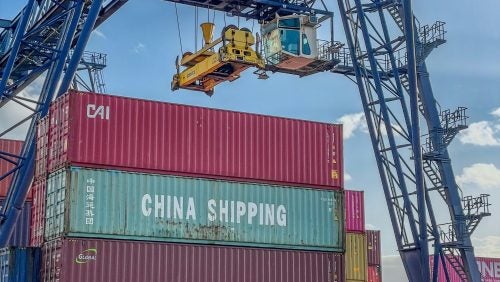
Image by Bernd Dittrich
China’s recent World Trade Organization (WTO) complaints against India, Türkiye, and the United States over their trade-related measures in the clean energy sector mark a significant shift from China primarily defending its own policies to more proactively challenging other countries’ industrial strategies. This new litigation posture not only reflects an intensifying rivalry among major powers over leadership in clean energy value chains (i.e., each stage of the production process), but also generates new frictions with developing economies whose industrialization pathways increasingly intersect and collide with China’s interests.
For much of the past two decades, China has more often found itself a respondent in WTO disputes concerning its tariffs and subsidies, and a target of trade remedies imposed by its major trading partners. In the clean energy sector, trade remedy actions have been launched against exports of solar panels, wind power equipment, and, more recently, batteries and electric vehicles (EVs). These trade remedy cases often centered on allegations of China’s unfair subsidies and other market-distorting practices that have propelled the country’s rapid ascendency as the world’s largest clean energy manufacturer, but were seen by China as an abuse of the WTO rules that allow these measures. By contrast, a new wave of cases now sees China “going on offense,” actively invoking WTO rules to contest what it portrays as discriminatory or protectionist measures by others, signalling a more assertive legal strategy in support of its industrial competitiveness in clean energy.
In this piece, we examine the substance of China’s recent complaints, noting the key jurisprudential issues that are likely to arise. We then consider the practical question of the value of bringing these complaints in the midst of the ongoing Appellate Body appointments crisis. Finally, we look beyond the litigation and consider broader issues related to how decarbonization efforts interact with industrialization competition.
China’s WTO Complaints
China has brought four WTO complaints in recent years relating to foreign government measures designed to promote clean energy industries. While China does not object to the promotion of clean energy in principle, each of these measures has components involving subsidies and discrimination against foreign, or specifically Chinese, products. It is these elements China is complaining about.
The complaint against the U.S.
In March 2024, China filed a WTO complaint challenging various U.S. subsidies under the Inflation Reduction Act (IRA) for clean vehicles and renewable energy projects. In its consultations request, China focused its claims on WTO obligations that have a discrimination component, rather than on the subsidies more generally. Specifically, China targeted IRA subsidies that require using domestic over imported goods or that otherwise discriminate against Chinese-origin products.
China noted that while it “strongly supports national and international efforts to reduce and mitigate the effects of climate change,” subsidies “that violate the WTO Agreement, including subsidies that are contingent upon the use of domestic over imported goods or that otherwise discriminate against imported goods, remain prohibited and threaten to undermine international cooperation on reducing and mitigating the effects of climate change.” The subsidies at issue here “are of this type,” as they are “discriminatory, protectionist, and contrary to WTO rules. They do nothing to advance the shared interest that all Members have in addressing climate change and are to be condemned.”
In terms of its legal claims, China contended that these measures violate Article III:4 of the General Agreement on Tariffs and Trade (GATT), Articles 2.1 and 2.2 of the Agreement on Trade-Related Investment Measures (TRIMs), and Articles 3.1(b) and 3.2 of the Agreement on Subsidies and Countervailing Measures (SCM Agreement).
In its defense of its measures in its first written submission, the U.S. put forward the following arguments:
- With regard to the SCM Agreement claims, the U.S. argued that “China has failed to establish that the Section 30D Clean Vehicle Tax Credit, which provided a credit of up to $7,500 to qualified buyers of new clean vehicles, is a prohibited import substitution subsidy inconsistent with Articles 3.1(b) and 3.2 of the Agreement on Subsidies and Countervailing Measures (SCM Agreement).”
- As to claims related to the “foreign entity of concern” (FEOC) exclusionary rule under the Section 30D Clean Vehicle Tax Credit, the U.S. invoked the security exception under GATT Article XXI(b), and, taking the view that this provision is “self-judging,” said “the sole finding that the Panel can make is to note the U.S. invocation of Article XXI(b).”
- In addition, the U.S. argued that both the Section 30D Clean Vehicle Tax Credit, which is provided to consumers, and the renewable energy tax credits, which include investment- and production-related tax credits for energy produced from eligible renewable sources, “are justified because they are measures ‘necessary to protect public morals’ within the meaning of Article XX(a) of the GATT 1994.” The public morals in question here are “the U.S. public morals against unfair competition, forced labor, theft, and coercion.”
- Finally, the U.S. made a novel legal argument that “while it is self-evident that WTO Members continue to have the authority to take security measures and measures under the general exceptions, it is also specifically the case that the GATT 1994 Article XX(a) and Article XXI(b) exceptions apply to claims under both the WTO Agreement on Trade-Related Investment Measures (TRIMs) and the SCM Agreement.”
The complaint against Türkiye
After Türkiye imposed tariffs on Chinese EVs and gasoline-powered autos in 2023 and 2024, China filed a consultations request on the matter in October 2024, and subsequently requested that a panel be established to hear the dispute.
The panel request identifies several measures. It starts with the additional duties on EVs, noting that “Türkiye imposes additional duties of 40% ad valorem on the importation of EVs from China that fall under certain tariff lines.” The additional duties, China says, “result in rates of duty greater than the rates of duty set out in Türkiye’s schedule of concessions,” and also “the additional duties do not apply to imports of EVs from other origins.”
It then notes that Türkiye “requires an import permit certificate to import EVs and certain other types of vehicles from China falling under certain tariff lines,” which is subject to the fulfilment of several cumulative conditions, such as establishing a minimum after-sales service network certified under specific standards. In contrast, imports of EVs and other types of vehicles originating in the EU and members with which Türkiye has a Free Trade Agreement (FTA) are exempted from the import permit certificate requirement. Thus, the import permit certificate scheme “is trade-restrictive and discriminatory,” China alleged.
Finally, the request says that Türkiye “also imposes additional duties on the importation of other types of vehicles from China.” In this regard, Türkiye “applies additional duties of 50% ad valorem or 9,500 USD per vehicle, whichever is higher, on products, such as internal combustion engine vehicles, classified under certain tariff lines within subheadings 8703.21 through 8703.33, and on products, such as non-plug-in hybrid vehicles, classified under certain tariff lines within subheadings 8703.40 through 8703.50.” Additionally, Türkiye “imposes duties of 40% ad valorem or 7,000 USD per vehicle, whichever is higher, on products, such as plug-in hybrid vehicles, classified under certain tariff lines within subheadings 8703.60 through 8703.70.” These additional duties “result in rates of duty greater than the rates of duty set out in Türkiye’s schedule of concessions.” Moreover, these additional duties “do not apply to imports of like vehicles from other origins.”
China claimed Türkiye violated the following WTO obligations: GATT Article I:1 and III:4, the non-discrimination obligations that cover most-favoured nation (MFN) treatment and national treatment; GATT Article II, which covers tariff bindings; GATT Article XI:1, on import restrictions; GATT Article X:3(a), on the administration of domestic laws; and related provisions of the TRIMS Agreement.
Neither China nor Türkiye makes its WTO dispute submissions publicly available, but the U.S. has now posted its third party submission online, and this submission provides some details on the legal defenses Türkiye has invoked.
As explained in the U.S. submission, Türkiye disagreed that the measures are inconsistent with WTO obligations, and also argued that, with respect to the MFN obligations of GATT Article I:1 and the tariff bindings under Article II:1(a) and (b), Türkiye’s additional duties are justified under GATT Article XX(b) and (g). Article XX(b) covers measures necessary for the protection of human, animal or plant life or health and Article XX(g) covers measures related to the conservation of exhaustible natural resources.
Türkiye also disagreed that the import permit licensing scheme is inconsistent with GATT Articles I:1, III:4, X:3(a), or XI:1 or Article 2.1 of the TRIMs Agreement, and argued in the alternative that the measure is justified under GATT Article XX(d). Article XX(d) covers measures necessary to secure compliance with laws or regulations that are not inconsistent with the GATT.
The complaints against India
In recent months, China has filed two WTO complaints against India related to clean energy products.
In October 2025, China filed its first ever WTO consultations request against India, targeting subsidies in the battery and auto sectors. The consultations request in the case refers to “certain measures maintained by India that affect trade in the automotive and renewable energy technology sectors.” In mid-January, China followed up by filing a panel request that makes minor adjustments to the claims. These requests identify the following programmes.
The Production Linked Incentive, National Programme on Advanced Chemistry Cell (ACC) Battery Storage (PLI ACC Scheme) “aims to incentivize the establishment of giga-scale manufacturing facilities for ACC batteries in India, with an emphasis on achieving maximum domestic value addition [DVA].” Through the PLI ACC Scheme, China argued that “India seeks to reduce reliance on imports, promote domestic value addition, and support the development of high-performance, quality battery technologies within a defined timeframe.”
In addition, the Production Linked Incentive Scheme for Automobile and Auto Component Industry (PLI Auto Scheme) “aims to boost domestic manufacturing of Advanced Automotive Technology (‘AAT’) products, including both vehicles and components,” China alleged.
And finally, China claimed that the Scheme to Promote Manufacturing of Electric Passenger Cars in India (EV Passenger Cars Scheme) “aims to attract investment from global EV manufacturers and promote India as a manufacturing destination for EVs.”
China argued that “[a]ll three programmes are in furtherance of the ‘Make in India’ initiative, which was first introduced by India in 2014.” The primary objectives of this initiative, according to China, “are to attract investments from across the globe and strengthen India’s manufacturing sector, with a view to transforming India’s industrial landscape and shaping India’s position as a global manufacturing hub.”
With regard to the legal claims, the panel request points to: (1) SCM Agreement Articles 3.1(b) and 3.2, as the DVA requirements are contingent upon the use of domestic over imported goods; and (2) GATT Article III:4 and TRIMs Agreement Article 2.1, as the DVA requirements accord less favorable treatment to imported goods than to like domestic goods.
In a separate dispute brought in December, China requested consultations on India’s subsidies to the solar sector (the request also covered tariffs on information technology goods). The request refers to “the conditions that govern the eligibility for, and disbursement of incentives under, the Production Linked Incentive Scheme: National Programme on High Efficiency Solar PV Modules (Solar Module Programme).” It states that India adopted the Solar Module Programme in April 2021 “to increase domestic manufacturing capacity of high efficiency solar photovoltaic (‘PV’) modules and, thereby, reduce India’s import dependence.” It additionally notes that the Solar Module Programme “is in furtherance of India’s ‘Make in India’ initiative,” whose primary goals are “to increase investment in Indian manufacturing, foster innovation, and to develop India’s manufacturing sector.”
The request states that India tries to achieve these goals in the solar sector by incentivizing “the establishment in India of giga-watt scale manufacturing facilities for solar modules through the provision of cash grants by India.” The incentives provided “are conditioned on several criteria, including a prescribed minimum local value addition (‘LVA’) requirement.”
China alleged that India’s measures violate the following WTO rules: (1) GATT Article III:4, on the basis that the measure “accords less favourable treatment to imported goods than to like domestic goods” via its “LVA requirements”; (2) TRIMS Agreement Article 2.1, as the measure is a trade-related investment measure that is inconsistent with Article III:4; and (3) SCM Agreement Article 3.1(b) and 3.2, as the measure “constitutes a subsidy within the meaning of Article 1.1 of that Agreement, and, through its LVA requirements, is contingent on the use of domestic over imported goods.”
Key Jurisprudential Issues in the Disputes
These China-initiated clean energy disputes against the U.S., Türkiye, and India center on allegedly discriminatory measures imposed at or behind the border that restrict market access for Chinese products and producers. The challenged measures either explicitly condition the eligibility for government support on the use of domestic goods or impose heightened regulatory or tariff burdens on imports from China, thereby putting Chinese counterparts at a disadvantage.
Domestic content requirements (DCRs) have repeatedly been found to be inconsistent with WTO rules in renewable energy disputes. Both dispute panels and the Appellate Body have developed a relatively consistent line of case law against such DCRs, leaving only very limited policy space for such measures. Nevertheless, since every measure challenged in a WTO complaint has its own unique characteristics, the panels in the Chinese complaints will not assume a violation, but rather will examine each measure at issue and apply WTO law.
If violations of specific obligations are found, several exceptions have been invoked by the defending member. Given the blatantly discriminatory nature of DCRs, the likelihood of a panel finding that they are justified by exceptions under GATT Article XX remains limited, if not non-existent. As of this writing, there is no WTO clean energy dispute in which a defending member has successfully relied on a general exception, such as Articles XX(b), (d), or (g) – dealing with measures necessary to protect human life or health, necessary to secure compliance with domestic laws, or related to the conservation of exhaustible natural resources, respectively – to excuse a breach of core non-discrimination obligations. While the GATT Article XXI security exception provides more deference than Article XX, panels have not accepted the U.S. view that invocation of this exception makes a dispute non-justiciable, and it is unlikely that such a defence would be successful here.
Nevertheless, in the U.S. and Türkiye cases, one or both of these defences have been invoked, sometimes in novel ways. (India has yet to respond in defending its use of DCRs.) How the panels interpret and apply the exceptions in these circumstances will be interesting to watch.
Can WTO Dispute Settlement Be Effective in the Midst of the Appellate Body Crisis?
A question that arises with respect to China’s decision to bring these complaints is whether this approach can be productive given the current crisis in WTO dispute settlement. In late 2019, the Appellate Body of the WTO ceased operating as a result of the U.S. decision to block the appointment of Appellate Body Members (i.e., the appeals court’s “judges”). As a result, when a government defendant in a WTO dispute loses before a panel, it is able to appeal the panel report “into the void,” which puts the dispute in a state of limbo. The practical impact is that governments bringing WTO complaints in the midst of this Appellate Body crisis are likely to have great difficulty turning a successful complaint into actual change in the defending member’s problematic policies.
There is an EU-led workaround in place called the Multi-Party Interim Appeal Arbitration Arrangement (MPIA), which is an appeals mechanism that acts as an alternative to the Appellate Body. Parties to the MPIA have agreed not to appeal panel reports to the non-functional Appellate Body, and to instead use the MPIA for appeals. However, India, Türkiye, and the U.S. are not parties to the arrangement. As a result, these countries are able to block any WTO panel decisions against their policies and measures from having legal effect.
In these circumstances, why would China bother bringing these complaints? There are several possible explanations.
First, the WTO jurisprudence on overtly discriminatory instruments such as DCRs is well established, which enhances the likelihood of China securing panel findings in its favour in these disputes. A WTO panel ruling that declares these policies and measures to be in violation of WTO rules is of political value, even if it cannot provide a legal basis for authorizing retaliation to induce compliance with WTO obligations. If the defending parties appealed the panel report into the void, China could still use the panel ruling as a rhetorical device in making a public push for the other governments to change their policies and measures.
Second, China’s turn to WTO dispute settlement to address its trade frictions with other partners, at a time of mounting skepticism toward multilateralism, sends an important signal of support for a rules-based multilateral trading system. (At the same time, pursuing adjudication within the WTO framework does not preclude China from resorting to other measures, including its own retaliatory actions, to register its discontent, although this would undermine any effort to support the rules-based system).
In the case of the U.S., the decision to pursue the case has an additional weakness. The clean energy policies being challenged were adopted by the Biden Administration, while the current Trump Administration has largely abandoned them. Nonetheless, given the broader U.S.-China trade conflict that is taking place, China may still see some geopolitical value in an international court ruling condemning a U.S. policy.
As for Türkiye, while it is not part of the MPIA, it did agree in one dispute to participate in a similar type of arbitration appeal. While the unique circumstances of that dispute may suggest that it was a one-off event, China could be hoping that Türkiye would agree to something similar here. If that does not happen, however, China may, as noted above, see value in an international ruling supporting its position.
Finally, the India disputes are at an early stage, and China will have to decide whether it is worth expending the resources to see the disputes all the way through to a panel ruling. It is also worth noting that China’s trade actions against India include a complaint against India tariffs on information and communications technology goods, so they are not just about clean energy, and these actions may be tied to some of the broader India-China tensions over the past couple of years.
Beyond the WTO Litigation: Decarbonization Cooperation vs. Industrialization Competition
China’s growing willingness to challenge its trading partners’ clean energy measures in formal disputes is about more than testing their legality under WTO rules. It also exposes the deeper frictions that may arise as countries attempt to advance their decarbonization and industrialization agendas simultaneously. Meanwhile, an emerging “economic security” lens that treats dependence on a limited number of foreign suppliers as inherently risky is likely to spur additional restrictive measures targeting trade in clean energy goods and technologies, compounding the contested legal terrain.
Notably, China’s formal complaints against India and Türkiye mark the emergence of clean energy–related trade disputes involving exclusively Global South members, underscoring a new phase of competition beyond traditional North-North or North-South dynamics. A more contentious legal arena is therefore likely to emerge in the Global South as countries pursue clean energy transitions alongside industrial progress, where developmental, industrial, and climate priorities increasingly conflict. Ensuring continued market access in these growing economies is crucial for China to preserve its position in the global clean energy supply chain and prevent a loss of competitiveness due to rising protectionism and “de-risking” trends in the West.
The dynamics of the conflict with India and with Türkiye differ in important ways. India seems focused on developing a domestically-owned industry that can compete with China not just in India but around the world. This strategy is grounded in the Indian government’s concern that China’s dominance in clean energy equipment and related supply chains poses a structural risk to India’s low-carbon transition. Türkiye, by contrast, is simultaneously trying to build up a domestically owned industry and lure in Chinese investors across a wide range of clean energy manufacturing sectors with incentive policies. Many of these investors are attracted to the Turkish market in part because production there can benefit from tariff-free access to the EU market.
China’s trade disputes with the Global North are very different. The complaint against the U.S. is largely geopolitical in nature. Many governments around the world expressed concern with the Biden Administration’s Inflation Reduction Act clean energy subsidies, but the Biden trade policy team worked out accommodations for U.S. allies. China, not one of the allies, was left feeling the impact, and decided to file a WTO complaint even though there is no indication a WTO dispute settlement ruling would impact the U.S. policies of concern.
Both the North and the South conflicts are guided by China’s interests in crafting a foreign policy that achieves its core interests and goals. With regard to its relations with the Global South, China sees itself as a leader of the developing world, and will need to maneuver carefully now that it has become an industrial powerhouse with dominant positions across clean energy sectors. Can it still be seen as an ally of developing countries if it stands in the way of their industrial progress?
As for the North, China is looking to stem the downward spiral of relations. It would like to boost its global standing by portraying its clean energy products as a key element in the fight against climate change. However, that effort is not likely to have much success on a U.S. that is currently governed by climate change skeptics and increasingly treats Chinese clean tech as a security threat rather than a climate solution.
Conclusions
From the perspective of the rules-based international trade order, it is far from clear that the multilateral trading system is well-equipped to manage the mounting frictions between China and other countries over clean energy competition. While the WTO dispute settlement system has, in the past, handled a number of clean energy-related disputes with some success, establishing important jurisprudence and prompting members to withdraw or modify several contested measures, the situation of the current disputes is different in important ways. For one thing, today’s conflicts involving China as the complaining party are more tightly intertwined with geopolitical rivalry and supply chain security. And for another, the dispute settlement system itself is experiencing a foundational crisis. As a result, China’s recent complaints pose profound difficulties for trade rules and test the boundaries of the WTO’s ability to accommodate security-framed industrialization and decarbonization policies.