GJIL Asks: Faculty Favorite Reads for 2025
January 2, 2026 by Caroline Fryling

We’re pleased to share five books nominated by Georgetown Law faculty—spanning different subjects, styles, and perspectives. Together, they offer a glimpse into the ideas and works that have recently captured our faculty’s attention.
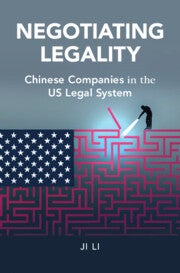
Negotiating Legality: Chinese Companies in the U.S. Legal System
Author: Ji Li
Nominated by Professor Mark Jia: “This is a compelling and well-rounded study of how Chinese firms navigate the American legal system. It is theoretically and methodologically rigorous and significantly complicates prevailing narratives that see Chinese firms as monolithic entities equally dominated by the party-state.”
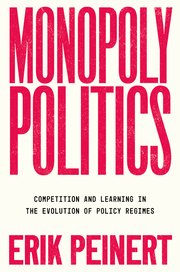
Monopoly Politics: Competition and Learning in the Evolution of Policy Regimes
Author: Erik Pelinert
Nominated by Professor Filippo Lancieri: “This is a technical but important read for our times. The book traces the evolution of the anti-monopoly movement in the US and in Europe, and how it interacted with the rise and fall of industrial policies throughout the 20th century. If history tends to repeat itself, learning about how antitrust and economic policy evolved during the post-war and early neoliberal period gives us good insight into what may happen over the next few decades as the world increasingly turns towards protectionism and industrial policy as drivers of international economic competition.”
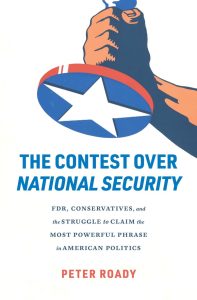
The Contest Over National Security
Author: Peter Roady
Nominated by Professor Todd Huntley: “In this book, Professor Roady describes the history of the term National Security. Specifically, he tells the story of how FDR used the language of national security to support many of his New Deal initiatives, equating economic security with national security but that conservative business groups were then able to shift the meaning of the term to include only international security issues leading up to the Cold War.”
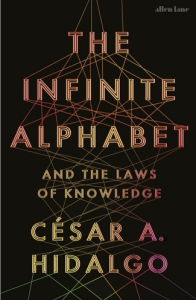
The Infinite Alphabet and the Laws of Knowledge
Author: César Hidalgo
Nominated by Professor Katrin Kuhlmann: “César Hidalgo uses stories, economic theory, and the laws of physics to examine the multi-layered and complex nature of knowledge and how it grows, diffuses, and ultimately creates value. The book offers insight into economic development (and why some industries grow while others do not), highlights the importance of local context, and offers hope for the evolution of knowledge sectors like law.”
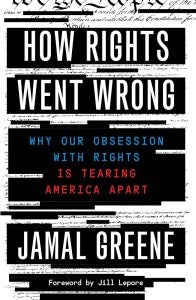
How Rights Went Wrong: Why Our Obsession with Rights Is Tearing America Apart
Author: Jamal Greene
Nominated by Professor Yvonne Tew: “for a comparative perspective on a peculiarly American approach to rights.”