

Our Work
Founded in 2014, the Center on Privacy & Technology is a leader at the intersection of privacy, surveillance, and civil rights.
Latest Work

Principles to Guide COVID Response Tech
The Center joined over 80 other organizations in calling for information technologies deployed to combat the spread of COVID-19 to preserve civil rights and privacy.
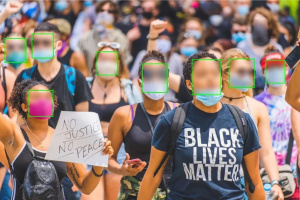
“Public Protest, Face Recognition, and the Shield of Anonymity” blog
Senior Associate Clare Garvie published a blog about how face recognition can be used to remove the anonymity of protestors. Read the whole blog here.

Legitimizing True Safety
Senior Associate Clare Garvie participated on a panel about police surveillance in Detroit organized by Stanford's Digital Civil Society Lab. Other speakers included Tawana Petty, Eric Williams, and Cierra Robson.

Coalition Letter for State Worker Protections
The Center coordinated a letter with 9 other organizations urging state governors to issue policies protecting essential workers during the pandemic and to petition OSHA to issue an emergency temporary standard to that end. Photo by Clark Van Der Beken on Unsplash.

“Data, Camera, Busted: How surveillance interferes with the right to organize at work” blog
Associate Gabrielle Rejouis published a blog explaining how companies are using surveillance and monitoring to bust unions and unionizing efforts. Read the whole blog here.

“Workers in a Crisis: The Need for Better Privacy Protections” blog
Associate Gabrielle Rejouis published a blog about the necessity of worker data protections and the Privacy Center's Worker Privacy Act. Read the whole blog here.
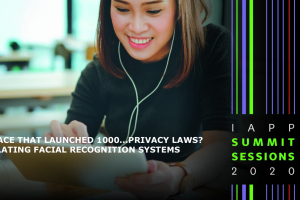
IAPP Webinar: The Face that Launched 1000… Privacy Laws?
Senior Associate Clare Garvie participated in an online panel organized by IAPP and FPF on the current state of face recognition legislation in the U.S. Clare spoke alongside Brenda Leong of FPF, James Loudermilk of IDEMIA, and Hector Dominguez Aguirre with the City of Portland.

Op-Ed: Maryland’s invasive face recognition system (Op-ed)
Policy Associate Jameson Spivack argued in The Baltimore Sun that Maryland has one of the most invasive face recognition systems in the nation, and that it was time for the legislature to put a moratorium on police face recognition use.

Letter to the Union Federation of Teachers on Face Recognition Use
The Center joined 29 other organizations in signing a letter to the United Federation of Teachers (UFT) urging it to cancel any existing contracts for face surveillance. In response to the letter, UFT committed to opposing face recognition use in NYC schools.

Who Has Your Face?
EFF has created a website to help the public learn how their face scans are used. The website draws on information uncovered by the Center in previously unpublished FOIA response documents.