

Our Work
Founded in 2014, the Center on Privacy & Technology is a leader at the intersection of privacy, surveillance, and civil rights.
Latest Work
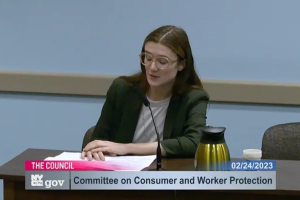
“Testifying about the Dangers of Face Recognition Use in the Private Sector” blog
On February 24, 2023, Justice Fellow Meg Foster testified on behalf of the Privacy Center in a hearing before the New York City Council Committee on Consumer & Worker Protection. Read her whole testimony, with some additional context, on our blog here.
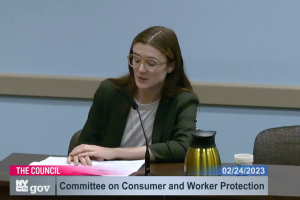
Testimony Before the NYC Council Committee on Consumer and Worker Protection
Justice Fellow Meg Foster testified before the NYC Council Committee on Consumer and Worker Protection advocating for a complete ban on facial recognition technology.
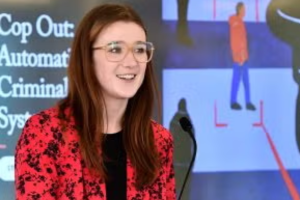
Roundtable Discussion of Cop Out: Automation in the Criminal Legal System
The Center hosted a roundtable discussion during Georgetown's Tech Society Week previewing the Center's new interactive digital narrative Cop Out: Automation in the Criminal Legal System. The discussion featured Assia Boundaoui, journalist and filmmaker behind The Feeling of Being Watched and Inverse Surveillance Project; Nasser Eledroos, Managing Director of Northeastern Law’s Center on Law, Innovation, and Creativity; Meg Foster, Justice Fellow at the Center on Privacy & Technology; Puck Lo, Research Director at Community Justice Exchange; Freddy Martinez, Senior Researcher at Project on Government Oversight; and Paromita Shah, co-founder and Executive Director of Just Futures Law.
Further Comments of Support for the Stop Discrimination by Algorithms Act
The Center submitted a letter to the Federal Trade Commission's Advanced Notice of Proposed Rulemaking on Commercial Surveillance and Data Security, a key proceeding with the potential to establish long-needed protections from abusive business practices enabled by the mass collection of personal data. The Center's comments urged the Commission to keep three specific contexts of surveillance-fueled harm and injustice in mind in its rulemaking determinations, namely worker surveillance, immigrant surveillance, and systems of policing and punishment.

Washington Post: How Workers Can Protect Their Privacy
Senior Associate Cynthia Khoo was quoted in a Washington Post article about workers' considerations when it comes to their private communications at work. She discussed various factors that workers should be aware of with respect to their digital security and communications privacy.
Advocacy for DC Community Control Over Police Surveillance Model Bill
Associate Cynthia Khoo filed comments in response to the Office of Science and Technology Policy's Notice of Request for Information on Public and Private Sector Uses of Biometric Technologies. The Center's submission focused on biometric surveillance of low-wage workers, and highlighted the importance of situating biometric surveillance technologies in their full historical context through a racial justice and socioeconomic justice lens.
Advocacy for DC Community Control Over Police Surveillance Model Bill
The Community Control Over Police Surveillance Model Bill (CCOPS) was a bill supported by the Community Oversight of Surveillance coalition that would require DC entities to obtain Council approval before acquiring new surveillance technology and entities would be required to report why they wanted to use the technology and the impact it would have on civil rights and liberties. The Center on Privacy and Technology was a client of the Communications and Technology Law Clinic and asked the clinic to advocate on our behalf at coalition meetings about CCOPS.
Joint Committee Hearing on Massachusetts Information Privacy Act
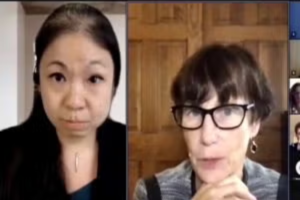
Associate Cynthia Khoo submitted oral and written testimony on the Massachusetts Information Privacy Act, to the MA Joint Committee on Advanced Information Technology, the Internet and Cybersecurity. MIPA would restrict biometric and worker surveillance and algorithmic discrimination.

Oral and Written Testimony on the MA Information Privacy Act
Associate Cynthia Khoo submitted oral and written testimony on the Massachusetts Information Privacy Act, to the MA Joint Committee on Advanced Information Technology, the Internet and Cybersecurity. MIPA would restrict biometric and worker surveillance and algorithmic discrimination.
“Data, Camera, Busted: How surveillance interferes with the right to organize at work” blog
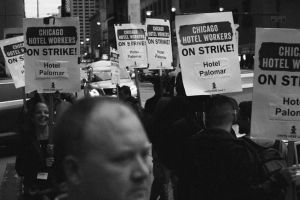
Associate Gabrielle Rejouis published a blog explaining how companies are using surveillance and monitoring to bust unions and unionizing efforts. Read the whole blog here.