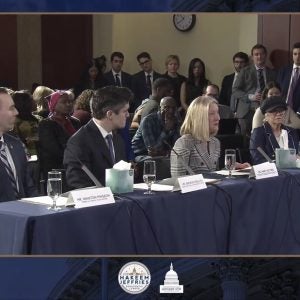
A non-partisan institute within Georgetown Law, ICAP’s experienced attorneys use novel litigation tools, strategic policy development, and the constitutional scholarship of Georgetown to vindicate individuals’ rights and protect our democratic processes. In an era of politically polarized discourse, ICAP offers vital understandings of the Constitution that draw on a wide range of practical experience, including extensive service in the federal government.
At the heart of ICAP is our litigation, as the courts remain a critical venue for the vindication of constitutional rights. ICAP collaborates with a wide array of litigation partners across the country, including non-profits, law firms, and governmental entities, focused on protecting constitutional rights. Our recent casework includes:
Constitutional dialogue also occurs outside the courts and in the public square. ICAP uses public education to inform and elevate that dialogue, empowering the community with vital understandings of the Constitution based on history, text, and precedent. Through direct engagement with the public in sponsored events as well as through writing and speaking, ICAP heightens and grounds today’s constitutional conversation. ICAP’s lawyers also drive policy change, working with lawmakers at the federal, state, and local levels to help situate their policymaking in constitutional principles and values.
Finally, ICAP plays an important teaching role within Georgetown Law by involving law students in our work. Through a practicum seminar, law students work directly with ICAP attorneys on constitutional impact litigation and related policy efforts. Additionally, ICAP provides litigation and policy support to other centers and institutes within the Georgetown community.
Featured Events
 7:30 PM EST
The 92nd Street Y, New York
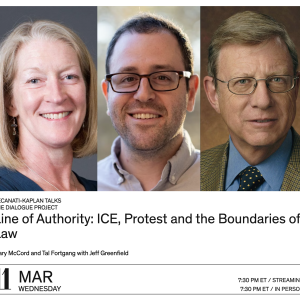
Line of Authority: ICE, Protest and the Boundaries of Law
7:30 PM EST
The 92nd Street Y, New York
Line of Authority: ICE, Protest and the Boundaries of Law
As Immigration and Customs Enforcement (ICE) operations spark confrontations in cities like Minneapolis and beyond, a pressing national question emerges: When does protest cross the line — and who decides where that line is? The Constitution guarantees the right to assemble and to petition the government. But what happens when protesters physically interfere with law enforcement actions? Is that a time-honored act of civil disobedience, or obstruction of justice?
In this timely installment of The Dialogue Project, veteran journalist Jeff Greenfield moderates a rigorous and civil exchange on the boundaries between dissent and enforcement, conscience and the rule of law.
Joining the discussion is ICAP's Mary McCord, former Acting Assistant Attorney General for National Security in the Obama administration and now Executive Director of the Institute for Constitutional Advocacy and Protection at Georgetown Law. Offering a contrasting perspective is Tal Fortgang, Legal Policy Fellow at the Manhattan Institute, a leading conservative public policy research center in New York.
At a moment when images of protest and enforcement dominate the headlines, this Dialogue Project confronts the constitutional and civic questions at the heart of the debate: What does the First Amendment truly protect? When is resistance justified — and when does it go too far? Don’t miss this urgent and thought-provoking conversation.