Course Spotlight: Students Explore Legal, Ethical Complexities in NFL Concussion Settlement Practicum
June 3, 2026
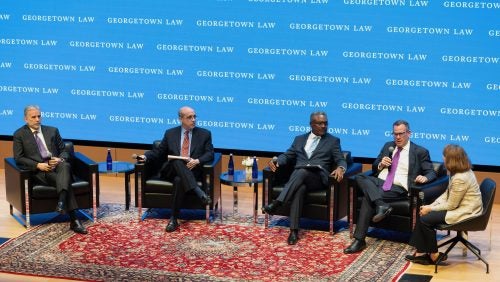
On March 10, NFL Concussion Settlement Co-Lead Counsel and Chief Negotiator Christopher Seeger (left) and former NFL running back-turned-player advocate Ken Jenkins (third from right) joined instructors Michael Rosenberg (second from left) and Justin Wyatt (second from right), L’99, for a conversation moderated by Assistant Dean for Experiential Education Maura DeMouy (right).
Since 2017, the landmark NFL Concussion Settlement has awarded more than $1.6 billion in compensation to former National Football League (NFL) players and their families for the effects of football-related brain injuries. Last semester at Georgetown Law, students learned firsthand from the legal practitioners behind the historic agreement.
In the “NFL Concussion Settlement Practicum: Mass Torts and Claims Advocacy for Former NFL Players,” offered for the first time during the spring 2026 semester, students explored the origins, structure and implementation of the largest sports-related class action settlement in history — and the ongoing medical and legal developments that affect the settlement’s 20,000-plus plaintiffs.

Sydney Veazie, L’26
“Understanding the human impact of cases like this is so important for developing emotional maturity as a legal advocate,” said Sydney Veazie, L’26, who was drawn to the course because of her interest in media, entertainment and health law. “Having a curriculum that goes beyond the legal issues of the settlement and covers scientific theory and neurological testing has impressed upon me the real-world impact of this representation.”
‘An incredible opportunity’
One of Georgetown Law’s experiential learning offerings — which during the 2025-2026 academic year included more than 30 project- and fieldwork-based practicums — the class was led by instructors Justin Wyatt, L’99, who is widely recognized for his work representing individual players and reforming inequities in the settlement claims process, and Michael Rosenberg, who oversees day-to-day implementation of the settlement for Seeger Weiss LLP.
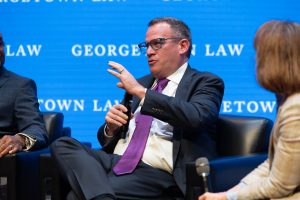
Course instructor Justin Wyatt, L’99
Through lectures, case analysis, guest speakers and exercises that mirrored real-world practice, students gained an understanding of the legal and medical dimensions of the settlement, including the history of football and common brain injuries, the claims submission and qualification process and the nuances of plaintiff-side work as relayed by Wyatt and Rosenberg.
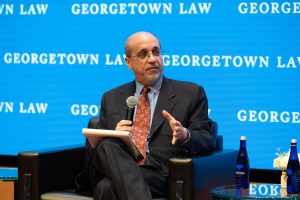
Course instructor Michael Rosenberg
For lifelong sports enthusiast and college athlete Michael Miele, C’23, L’26, the chance to explore a real-world issue at the intersection of sports and the law was a highlight of his law school experience.
“This was what I came to Georgetown for,” he said, noting that the class midterm and final projects — which involved roleplaying as the special master who oversees the settlement and handling real, redacted client files — were among the most interesting parts of the course. “It was an incredible opportunity to have two such valuable professors and people in this industry sitting right there, open to any question you could think of.”
Learning from ‘squeaky wheel’ advocates
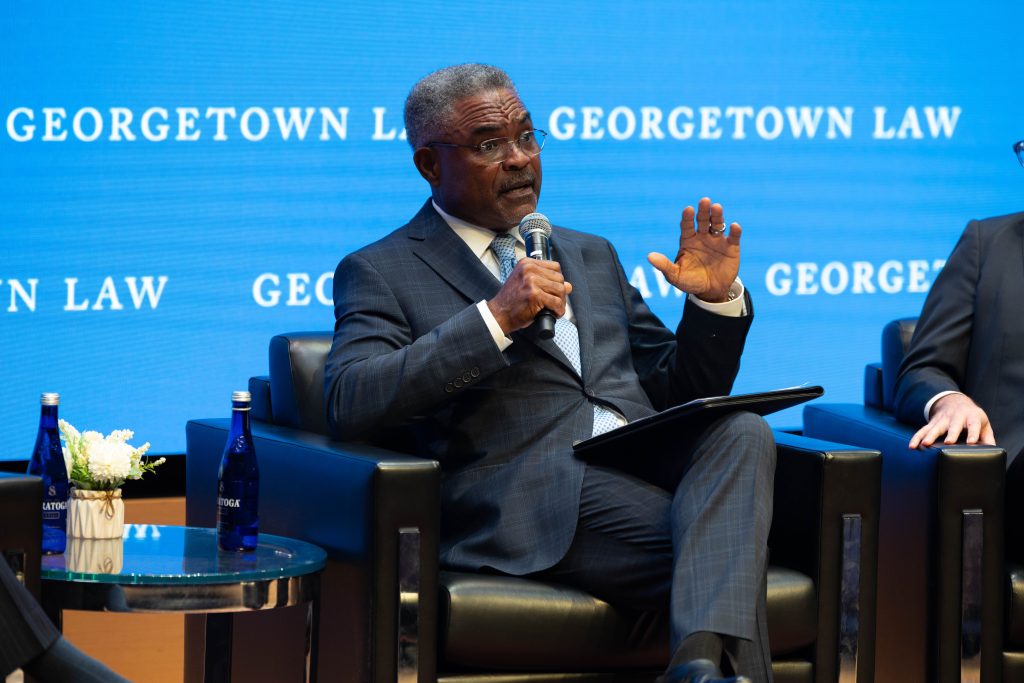
Former NFL running back Ken Jenkins, the co-founder and former chair of the NFL Concussion Settlement Player Advocacy Committee, spoke to students at a March 10 panel event.
Another highlight of the semester was a March 10 panel about the agreement that featured former NFL running back Ken Jenkins, the co-founder and former chair of the NFL Concussion Settlement Player Advocacy Committee, and Christopher Seeger, settlement co-lead counsel and chief negotiator.
Joined by Wyatt and Rosenberg for a conversation moderated by Assistant Dean for Experiential Education Maura DeMouy, Jenkins and Seeger spoke candidly about ethical issues such as “race norming,” or the practice of relying on different cognitive benchmarks for Black players, which historically limited their access to compensation through the settlement.
“We became the squeaky wheel that just wouldn’t go away, especially as it relates to race norming,” said Jenkins of the Player Advocacy Committee, which assists former NFL players and their families in the settlement process. “The other members on the committee — they reminded us every day of why we were doing this, because some of them actually had cases that were ongoing. They were having difficulty getting any kind of resolution.”
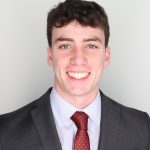
Michael Miele, C’23, L’26
The chance to hear so openly from Jenkins and Seeger (who earlier in the day joined the students for a question-and-answer session during their class meeting) was invaluable, Miele said.
“You normally read cases in these courses, and you can guess at what the attorney was getting at, or the judge was thinking, but you’re speculating,” he said. “Actually having [Seeger], the person who was making these major decisions, in the classroom was an amazing experience.”