

Our Work
Founded in 2014, the Center on Privacy & Technology is a leader at the intersection of privacy, surveillance, and civil rights.
Latest Work

“Global Landscapes on Data Privacy: The Brazilian National Authority on Data Protection” event hosted by the Privacy Center
From banning Sam Altman’s “Tools for Humanity” iris-scanning crypto project, to stopping Meta from mining user data for training AI, Brazil has been a global trailblazer in issues of privacy and data protection. On April 24, the Director of the Brazilian National Authority for Data Protection, Professor Iagê Miola, joined us for a conversation about the hemispheric landscapes of data protection. Dr. Marianna Poyares, Postdoc Fritz Fellow at the Center on Privacy & Technology at Georgetown Law moderated.

“The Impact of AI on Students, Education, and Privacy” Black History Month event hosted by Honey Brown Hope Foundation
Senior Associate Clarence Okoh spoke at Black History Event titled "The Impact of AI on Students, Education, and Privacy" focused on technology and racial justice at the Houston Community College and hosted by the Honey Brown Hope Foundation and the NOTICE Coalition's No Data About Us Without Us Fellowship Program.

Guest lecture at Howard University School of Law
Senior Associate Clarence Okoh guest lectured at Howard University School of Law for the "Contemporary Issues in AI and Civil Rights" seminar course. He spoke on "AI, Civil Rights and School Discipline."
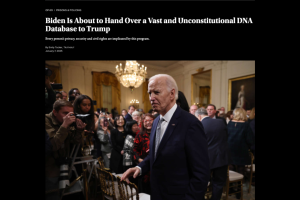
“Biden Is About to Hand Over a Vast and Unconstitutional DNA Database to Trump” Op-Ed in Truthout
Executive Director Emily Tucker published an op-ed, “Biden Is About to Hand Over a Vast and Unconstitutional DNA Database to Trump” in Truthout about the immense DNA database the Department of Homeland Security has been creating and the danger it holds especially as Donald Trump returns to office. "Every person's privacy, security and civil rights are implicated by this program," wrote Tucker.
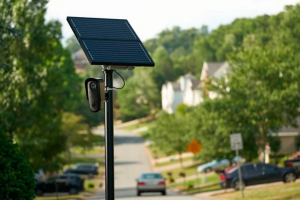
Senior Associate quoted in the Columbia Missourian
Senior Associate Clarence Okoh spoke with reporter Lucy Valeski at the Columbia Missourian and was quoted in a piece about the incoming police cameras in Columbia, Missouri. "The technology can be used to further discriminate against people of color, who are already disproportionately impacted by over-policing, according to Clarence Okoh. ... 'The decision about where that license plate gets placed is one that is oftentimes fueled by and reflects and reproduces patterns of racial justice.'"
“DHS Should Halt Latest Tech Investments, Due to History of Rights Violations” blog
Associate Emerald Tse wrote a blog about the Department of Homeland Security's investment in artificial intelligence. "Those technologies may have a theoretical benefit, but we can be certain about how they subvert privacy and civil rights," wrote Tse. Read the whole blog here.
“Our remarks from a White House meeting on international human rights treaty compliance” blog
In 2023, dozens of organizations submitted reports to the Human Rights Committee documenting serious deficiencies in the U.S.’s compliance with the requirements of the International Covenant on Civil and Political Rights. On behalf of the coalition’s working group on privacy, freedom of expression, assembly and association, Director of Research and Advocacy Stevie Glaberson spoke at a White House meeting to cover all of the concerns of all 25 working group members. You can read the full text of her remarks, prepared together with partners at The Center for Constitutional Rights, Asian Law Caucus, UC Irvine School of Law, and input from the full working group, at our blog.

Virtual Teach-In: Algorithmic Housing Discrimination in D.C.
Senior Associate Cynthia Khoo, Director of Research and Advocacy Stevie Glaberson, and Justice Fellow Emerald Tse coordinated a virtual teach-in on algorithmic housing discrimination in DC. The teach-in featured speakers with legal and research expertise in or firsthand experiences of algorithmic housing discrimination, including: Natasha Duarte (Upturn); Susie McClannahan (Equal Rights Center); Troy and Monique Murphy (individual members of the Fair Budget Coalition), and Wanqian Zhang (3L at Georgetown Law and Student Attorney at the Communications and Technology Law Clinic).
Comments to the Department of Health and Human Services
The Privacy Center co-authored with Upturn a comment to the US Department of Health and Human Services on a proposed update to the agency’s regulations implementing Section 504 of the Rehabilitation Act of 1973, arguing that the proposed rule is incomplete because it fails to address the sites in the system where most discrimination occurs: reporting, screening, and investigation. Our comment also highlights how agencies may use algorithmic and data-driven tools that contribute to disability discrimination and provides recommendations to address discrimination at the front end of the system.
Tech Policy Press: Does ICE Data Surveillance Violate Human Rights Law? The Answer is Yes, and It’s Not Even Close
The Center’s Executive Director Emily Tucker and Clinical Fellow at the International Justice Clinic at UC Irvine Law co-authored a piece published in Tech Policy Press that highlights the United Nations Human Rights Committee's Concluding Observations that calls out how ICE’s surveillance practices conflict with human rights law and the right to privacy. Those observations echo our report co-written with the International Justice Clinic we submitted as part of their periodic review process.