

Our Work
Founded in 2014, the Center on Privacy & Technology is a leader at the intersection of privacy, surveillance, and civil rights.
Latest Work

Cynthia Khoo Quoted in an Article Published by the Office of the Privacy Commissioner of Canada
Cynthia Khoo was quoted in an article published by the Office of the Privacy Commissioner of Canada about her work on the Installing Fear project at Citizen Lab.
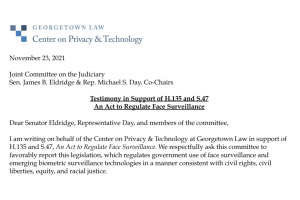
Written Testimony in Support of An Act to Regulate Face Surveillance to the MA Judiciary Committee
Associate Jameson Spivack submitted written testimony in support of S47/H135, An Act to Regulate Face Surveillance, to the Massachusetts Judiciary Committee. The bill, which would strengthen the state's existing face recognition regulation, builds on the work of grassroots Massachusetts organizations whom the Center has previously supported in pushing for face recognition legislation.

Jameson Spivack Quoted in Asahi Shimbun Article
Jameson Spivack was quoted in the Asahi Shimbun about tech companies' suspension of face recognition technology and who the dominant firms in the face recognition market are.
Coalition Letter to Congress in Support of Build Back Better Act FTC Provisions
The Center signed onto a letter with over two dozen other tech policy, civil rights, and consumer protection organizations, supporting greater funding ($1 billion) and stronger enforcement powers (first-time civil penalties) for the FTC in the Build Back Better Act, to facilitate the agency's data protection and antitrust activities.
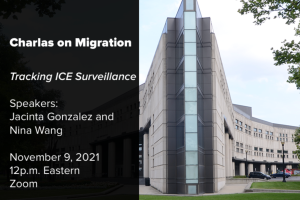
Panel: Tracking ICE Surveillance
Policy Associate Nina Wang participated in a panel hosted at The Ohio State University Moritz College of Law entitled "Charlas on Migration: Tracking ICE Surveillance." The discussion focused on ICE's use of surveillance technology in modern immigration policing practices.

Panel: Exploring How Face Recognition May Appear Before Judges
As part of the Council of Chief Judges of the State Courts of Appeal Annual Conference, Senior Associate Clare Garvie participated on a panel aimed at exploring how face recognition may appear before judges as an element of a case, and issues relating to privacy, due process, equal protection, discrimination, data ownership, and control.

Letter to the FTC Urging A New Rulemaking Process to Protect Privacy and Civil Rights and Restrict Discriminatory Data Practices
The Center signed onto a letter alongside 44 groups working on privacy, civil rights, media democracy, or consumer advocacy, urging the FTC to launch a rulemaking process to protect privacy and civil rights and restrict discriminatory data practices.
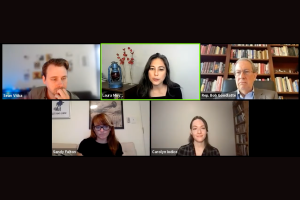
Panel: In Recognition of the 20th Anniversary of the Enactment of the Patriot Act
Associate Director Laura Moy participated in a panel discussion on the current state of surveillance in the US. In recognition of the 20th anniversary of enactment of the Patriot Act, the Fourth Amendment Advisory Committee is hosting a panel discussion on the current state of surveillance in the US. The panel will discuss how surveillance practices have changed over the past 20 years and what's happening now. They were joined by former Colorado Sen. and member of SSCI Mark Udall and former Virginia Rep. and House Judiciary Chair Bob Goodlatte.
Panel on Algorithmic Justice During DC Pro Bono Week 2021
Senior Associate Clare Garvie joined a panel presentation on algorithmic justice and the discriminatory use and impact of AI and machine-learning technologies hosted by the Washington Council of Lawyers for DC Pro Bono Week. Other panelists include Alan de Levie of DC Legal Hackers, Jason Tashea ofJustice Codes, Matthew Bruckner and Valerie Schneider of Howard Law, and Nassim Moshiree of ACLU-DC.
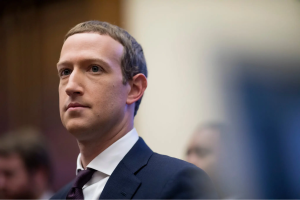
Faculty Director David Vladeck Quoted in the New York Times on DC’s Consumer Protection Lawsuit
Faculty Director David Vladeck was quoted in the New York Times discussing the attorney general for the District of Columbia's move to add Facebook’s chief executive, Mark Zuckerberg, to a consumer protection lawsuit, in one of the first efforts by a regulator to expose him personally to potential financial and other penalties.