

Our Work
Founded in 2014, the Center on Privacy & Technology is a leader at the intersection of privacy, surveillance, and civil rights.
Latest Work
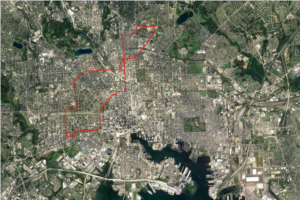
Amicus Brief Against the Baltimore Police Department
The Center files an amicus brief arguing that the Baltimore Police Department’s warrantless aerial surveillance program is unconstitutional.

Document Journal: Your Face is Already in a Criminal Lineup
Senior Associate discussed the risks of police face recognition use in a long-form Q&A with Document Journal.

Podcast: Banned In PDX, Tracking Portland’s Face Recognition Ban (Apple Podcast)
In an episode of the podcast series Banned in PDX, Policy Associate Jameson Spivack discusses police use of face recognition on protesters, with a focus on Portland, OR.
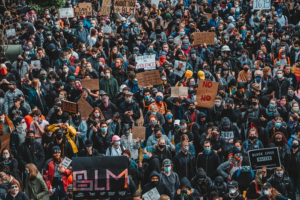
Op-Ed: Law Enforcement Could Leverage Facial Recognition During Protests
Policy Associate Jameson Spivack wrote an op-ed for Route Fifty about the lack of police face recognition regulation, how this allows police to surveil protesters, and the potential consequences for civil rights and liberties.

CounterSpin Interview: Face Recognition and Free Speech
Senior Associate Clare Garvie was interviewed on CounterSpin about police face recognition misuse, misidentifications, and the risks to free speech and association in light of nationwide protests.
Coalition Letter to Congress on Police Face Recognition
The Center was one of 40 organizations that wrote a letter urging Congress to pass strong police face recognition legislation, stop continued federal funding for the technology, and ensure policing reforms include face recognition prohibitions. Photo by Joshua Sukoff on Unsplash

Coalition Letter to Congress on Protests and Police Reform
The Center joined over 100 organizations calling on Congress to cease federal funding for police surveillance technology used to criminalize dissent. Photo by Liam Edwards on Unsplash.

Legitimizing True Safety
Senior Associate Clare Garvie participated on a panel about police surveillance in Detroit organized by Stanford's Digital Civil Society Lab. Other speakers included Tawana Petty, Eric Williams, and Cierra Robson.

Op-Ed: Maryland’s invasive face recognition system (Op-ed)
Policy Associate Jameson Spivack argued in The Baltimore Sun that Maryland has one of the most invasive face recognition systems in the nation, and that it was time for the legislature to put a moratorium on police face recognition use.

Location Privacy Complaint Leads to FCC Action
Citing the Center's research and privacy, accuracy, and bias concerns, the Globe's Editorial Board recommends that the Massachusetts legislature and lawmakers across the country hit the pause button on police face recognition use.