

Our Work
Founded in 2014, the Center on Privacy & Technology is a leader at the intersection of privacy, surveillance, and civil rights.
Latest Work

Senior Associate Clare Garvie was Quoted in New York Times Article
In the New York Times article, "She Was Arrested at 14. Then Her Photo Went to a Facial Recognition Database," senior associate Clare Garvie was quoted regarding a large police department using facial recognition on juveniles.
House Oversight Committee Hearing on Face Recognition
Senior Associate Clare Garvie testified before the House Committee on Oversight and Reform. She argued that in the absence of regulation police use of face recognition poses risks to our First, Fourth, and Fourteenth Amendment rights. Because of those risks, a moratorium is appropriate.
New York Times Calls for Regulation of Facial Recognition
Citing the Center's reports, The New York Times' editorial board called for regulation of NYPD's use of face recognition, warning that "dragnets become tools aimed at minority populations." Earlier, columnist Farhad Manjoo called for a moratorium on the technology based on Center reports.
Two New Privacy Center Reports Reveal Serious Problems With Police Use of Face Recognition
On May 16, 2019, the Privacy Center released "Garbage In, Garbage Out: Face Recognition on Flawed Data" and "America Under Watch: Face Surveillance in the United States," two new research reports that reveal new information on police use of face recognition. Read the full press release.

NIST International Face Performance Conference
Senior Associate Clare Garvie spoke at the National Institute of Standards and Technology's first conference, on a panel about technical factors affecting the deployment and use of face recognition technology. Clare's remarks focused on the real-world consequences of differential error rates, including in the law enforcement context.
Defender Summer School’s Facial Recognition Software and Eyewitness Identification Series
Senior Associate Clare Garvie conducted a training on police use of face recognition technology to the Ninth Judicial Circuit 2018 Defender Summer School at Barry University in Orlando, FL.
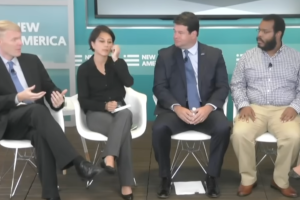
Turning the Tide on Police Surveillance
Executive Director Laura Moy spoke on a panel hosted by New America on police surveillance and the adoption—by a growing number of cities—of ordinances that help create opportunities for communities to exercise control over the surveillance technologies their police agencies have and use.
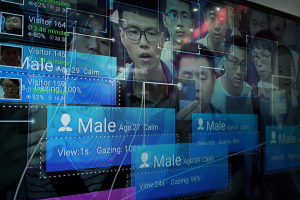
Op-Ed: Facial Recognition Threatens Our Fundamental Rights
Senior Associate Clare Garvie wrote an op-ed for The Washington Post about how face surveillance technology risks changing our expectations of privacy, our right not to be investigated unless suspected of wrongdoing, and our freedom from deeply flawed policing practices.
Coalition Letter to Axon’s AI Ethics Board
The Center co-wrote a 42-organization coalition letter to Axon's new "AI Ethics Board." The letter urges the board to center the experiences of policed communities in its process, and argues that integrating face surveillance with body-worn cameras would be "categorically unethical."
Over Half of All American Adults Are In a Police Face Recognition Database, New Report Finds
On October 18, 2016, the Privacy Center released "The Perpetual Line-Up: Unregulated Police Face Recognition in America." Authored by Associate Clare Garvie, Executive Director Alvaro Bedoya, and Staff Technologist Jonathan Frankle, the report found that more than half of American adults were enrolled in a face recognition network searchable by law enforcement. Read the full press release.