

Our Work
Founded in 2014, the Center on Privacy & Technology is a leader at the intersection of privacy, surveillance, and civil rights.
Latest Work
Privacy Center filed an amicus brief with the Harvard Cyberlaw Clinic
The Center on Privacy & Technology filed an amicus brief with the Harvard Cyberlaw Clinic in Commonwealth v. Rodriguez (SJC-13727). The brief supports the defendant-appellee’s objection to the use of racially-targeted police investigatory techniques on social media platforms.
Senior Associate quoted in the Columbia Missourian
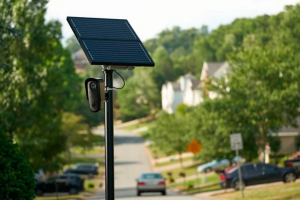
Senior Associate Clarence Okoh spoke with reporter Lucy Valeski at the Columbia Missourian and was quoted in a piece about the incoming police cameras in Columbia, Missouri. "The technology can be used to further discriminate against people of color, who are already disproportionately impacted by over-policing, according to Clarence Okoh. ... 'The decision about where that license plate gets placed is one that is oftentimes fueled by and reflects and reproduces patterns of racial justice.'"

Privacy Center signs on to letter in support of NYC’s “End Correctional Community Surveillance” Act
Senior Associate Clarence Okoh was point on signing the Privacy Center onto a national sign-on letter in support of New York City's "End Correctional Community Surveillance Act" which would end the universal recording, monitoring, and surveillance of jail calls.

Telemundo Covers “Raiding the Genome”
Telemundo covered our latest report findings from "Raiding the Genome: How the United States Government Is Abusing Its Immigration Powers to Amass DNA for Future Policing" in a video piece and featured an interview (in Spanish) with report co-author and Director of Research & Advocacy Stevie Glaberson.

Fritz Fellow Simone Edwards Presents at Fritz Conference
The Center's 2023-2024 Fritz Fellow Simone Edwards presented, along with the Massive Data Institute team, at the annual Fritz Conference. Simone presented on her work as part of the Fritz team during the 2023-2024 school year. She discussed her work digesting documents disclosed in response to the Center's FOIA requests, as well as the strategic corporate research she conducted to learn more about the companies and individuals behind the technologies police departments were buying, specifically probabilistic genotyping programs.
Government Technology Coverage of Cop Out Roundtable
Government Technology published an article covering the Center's event, "Cop Out: Automation in the Criminal Legal System," covering the discussion around what’s at stake for communities subjected to these tools and whether new technology is simply exacerbating long-standing issues in the criminal justice system and reinforcing disparities.

Privacy Center Hosts Launch Event for New Interactive Digital Narrative on Algorithms in the Criminal Legal System
On March 29, 2023, the Privacy Center hosted published a new interactive digital narrative titled "Cop Out: Automation in the Criminal Legal System," which explores the algorithmic technologies that are increasingly used to inform or make critical decisions about policing and punishment. This publication's release was accompanied by an in-person roundtable discussion focused on strategies of resistance. Read the full press advisory.

“Casting a light on “alternatives” to policing” blog
Associate Nina Wang wrote a blog on the NYPD's street lighting campaign and the problems it reveals about law enforcement surveillance technology. Read the whole blog here.

Article in the NYU Review of Law and Social Change
Emily Tucker's article "Deliberate Disorder: How Policing Algorithms Make Thinking About Policing Harder" was published in the NYU Review of Law and Social Change Vol. 46. The article argues that algorithmic policing furthers brutality and interferes in critical deliberation of what policing is and what it should be.

Amicus Curiae Brief in Illinois Face Recognition Case
Associate Jameson Spivack wrote an op-ed in The Washington Post arguing that Maryland's criminal justice reform legislation should include restrictions on predictive police technologies.