

Our Work
Founded in 2014, the Center on Privacy & Technology is a leader at the intersection of privacy, surveillance, and civil rights.
Latest Work
Two New Privacy Center Reports Reveal Serious Problems With Police Use of Face Recognition
On May 16, 2019, the Privacy Center released "Garbage In, Garbage Out: Face Recognition on Flawed Data" and "America Under Watch: Face Surveillance in the United States," two new research reports that reveal new information on police use of face recognition. Read the full press release.
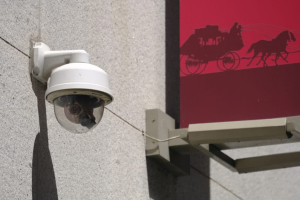
NPR: San Francisco Bans Facial Recognition Tech
Senior Associate Clare Garvie spoke with NPR's On Point about the recent San Francisco face recognition ban and the privacy and civil liberties concerns surrounding police use of the technology.
Amici Curiae Brief in support of Petitioner
The Center's Policy Associate Jameson Spivack was interviewed and quoted in The Hill about recent legislative efforts to combat the potential discriminatory effects of AI. "I think that any legislation needs to recognize that while these technologies affect everyone, they disproportionately affect vulnerable people."
Center Associate Endorses Wasserman Bill
Associate Harrison Rudolph endorsed Rep. Debbie Wasserman Schultz's (D-FL) bill, the Families, Not Facilities Act. The bill would prohibit the use of children's information to find and deport their loved ones.

Founding Director Delivers Chavez Lecture on Privacy and Civil Rights
Founding Director Alvaro Bedoya delivered the U.S. Senator Dennis Chavez Endowed Lecture on Law & Civil Rights at the University of New Mexico School of Law. In his lecture, he drew upon the research underlying several Color of Surveillance conferences to argue that privacy should be considered a civil right, not just a civil liberty.
Federal Law Pauses Parent Trap
A federal law was signed prohibiting the use of children's information for deportation purposes until September 30, as part of the 2019 Homeland Security Appropriations Bill. The law followed a November 2018 letter, coordinated by the Center and co-signed by 111 other NGOs, calling for the termination of an interagency agreement that used children's information to find and deport their relatives.
Coalition Letter on Federal Privacy Conversations Calls for Centrality of Civil Rights
The Center joined 42 other digital rights and civil rights organizations calling for Congress to prioritize civil rights debates, hearings, and legislation.

Opportunities for Bipartisan Tech Policy
Executive Director Laura Moy spoke at an event co-hosted by Next Century Cities, the American Action Forum, and Public Knowledge exploring opportunities for bipartisan action on technology policy issues in the new Congress.
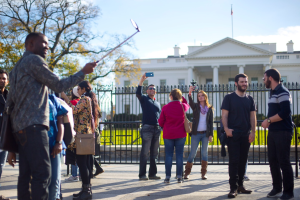
Washington Post: Facial Recognition Could Make Us Safer—and Less Free
The Washington Post's Editorial Board reiterated its call for Congress to step in and decide the line between acceptable and unacceptable uses of face recognition technology, after the Department of Homeland Security announced a real-time face surveillance pilot at the White House.
Comments to FTC on “Competition and Consumer Protection in the 21st Century”
Executive Director Laura Moy filed comments relevant to a planned Federal Trade Commission hearing on competition and consumer protection in the 21st Century. She argued that discriminatory data practices should not be allowed and that when consumers cannot avoid sharing their information, heightened privacy protections should apply.