

Our Work
Founded in 2014, the Center on Privacy & Technology is a leader at the intersection of privacy, surveillance, and civil rights.
Latest Work
Oppression of the Future in “Safe Surrender”
Deputy Director Laura Moy responded in Slate to a new science fiction short story by Meg Elison. In her reaction, Laura reflected on the story's themes of prejudice, outright racism, and the role of government surveillance in maintaining systems of oppression.

Extreme Vetting Software Abandoned by ICE
After months of advocacy coordinated by the Center and others in the Immigrant Surveillance Working Group, the Department of Homeland Security formally dropped its "Extreme Vetting Initiative." It would have automatically and continuously scanned American immigrants' social media posts to flag 10,000 individuals annually for deportation investigations.
Coalition Letter to Axon’s AI Ethics Board
The Center co-wrote a 42-organization coalition letter to Axon's new "AI Ethics Board." The letter urges the board to center the experiences of policed communities in its process, and argues that integrating face surveillance with body-worn cameras would be "categorically unethical."
National and Local Civil Rights Groups Urge Strong Ethical Review of Axon’s Police Technology
Following the launch of a new "artificial intelligence ethics board" at Axon, a major U.S. police technology vendor, the Privacy Center joined 41 other civil rights, racial justice, and community organizations in a letter with recommendations for how the board can uphold its ethical responsibilities when reviewing the company's products. Read the full press release.
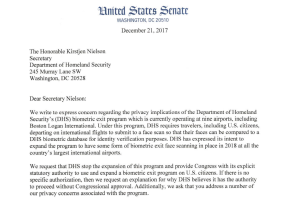
Bipartisan Senate Oversight Letter of Biometric Exit
Senators Edward Markey (MA) and Mike Lee (UT) sent a letter urging the Department of Homeland Security to "stop the expansion" of its Biometric Exit program and to address privacy concerns about the program. The letter cited the Center's December 2017 report on the program, Not Ready for Takeoff, which raised many of the same concerns.

Center Report: Not Ready For Takeoff
The Center released a report on the Department of Homeland Security's airport face scanning program, finding that the program never was justified, may violate federal law, is technically flawed, and has not been sufficiently evaluated for bias. The report recommends a suspension of the program pending correction of these problems.
New DHS Program to Scan Americans’ Faces at Airports Riddled with Legal and Technical Problems
On December 21, 2017, the Privacy Center released "Not Ready for Takeoff." Authored by Associate Harrison Rudolph, Deputy Director Laura Moy, and Executive Director Alvaro Bedoya, the report explains that the U.S. Department of Homeland Security (DHS) has been scanning of the faces of travelers at eight U.S. airports without legal authorization or technical safeguards. Read the full press release
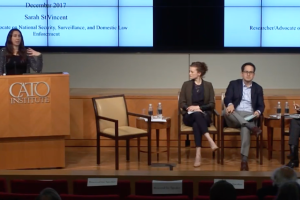
Cato Institute Surveillance Conference 2017
Clare Garvie and Founding Director Alvaro Bedoya spoke at Cato Insitute's annual surveillance conference about the "Digital Muslim Ban" and the ever-increasing use of face recognition technology by police.
Op-Ed: Facial Recognition Is Here. The iPhone X Is Just the Beginning
In an op-ed published in The Guardian, Clare Garvie argued that Apple’s incorporation of face recognition into the iPhone X may lead to a dangerous complacency to the risks of the pervasive deployment of the technology.
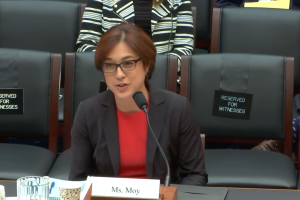
Testimony on Impact of Algorithmic Decisionmaking Tools on Consumers by our Deputy Director
On November 29, 2017, the House Energy & Commerce Committee, Subcommittee on Communications and Technology and Subcommittee on Digital Commerce and Consumer Protection, held a hearing entitled "Algorithms: How Companies’ Decisions About Data and Content Impact Consumers." Deputy Director Laura Moy provided testimony on the pressing need for strong default protections for consumer data privacy. Watch the full video recording.