

Our Work
Founded in 2014, the Center on Privacy & Technology is a leader at the intersection of privacy, surveillance, and civil rights.
Latest Work
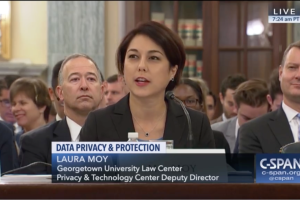
Testimony on Consumer Data Privacy Before U.S. Senate Committee by our Deputy Director
On October 10, 2018, technology and privacy experts testified before the U.S. Senate Commerce Committee, which was considering drafting federal data privacy legislation. Deputy Director Laura Moy's testimony provided policy recommendations that draw on lessons from the EU's General Data Privacy Regulation and the California Consumer Protection Act. Watch the full video recording and read her written testimony.
The FAA Reauthorization Act of 2018
On October 5, 2018, a federal law was signed requiring privacy and racial bias assessments of the federal government's use of biometric technologies at airports—the first-ever federal law requiring artificial intelligence bias testing. The law was enacted following the Center's December 2017 report, Not Ready For Takeoff, which found privacy and bias problems in these deployments.
DHS OIG Audit of Biometric Exit
The Office of the Inspector General for the Department of Homeland Security conducted an audit of the agency's use of face scans at airport departure gates that closely tracked and validated many of the concerns raised in the Center's Not Ready for Takeoff report. OIG reported, among other things, that the program exhibits age bias, causes traveler delays, and may end up being far more costly than initial estimates.
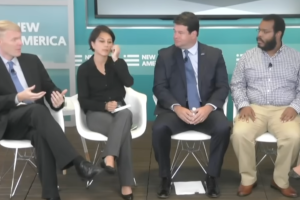
Turning the Tide on Police Surveillance
Executive Director Laura Moy spoke on a panel hosted by New America on police surveillance and the adoption—by a growing number of cities—of ordinances that help create opportunities for communities to exercise control over the surveillance technologies their police agencies have and use.
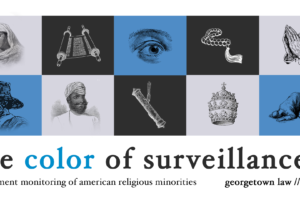
The Color of Surveillance: Government Monitoring of American Religious Minorities
The third annual Color of Surveillance conference delved into the surveillance of religious minorities in the United States. In addition to discussions about this issue's contemporary impact, the conference featured a historian who spoke about the surveillance of the Pilgrims in England.
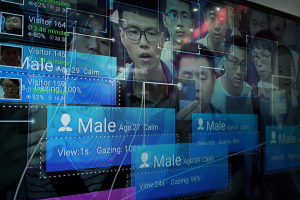
Op-Ed: Facial Recognition Threatens Our Fundamental Rights
Senior Associate Clare Garvie wrote an op-ed for The Washington Post about how face surveillance technology risks changing our expectations of privacy, our right not to be investigated unless suspected of wrongdoing, and our freedom from deeply flawed policing practices.
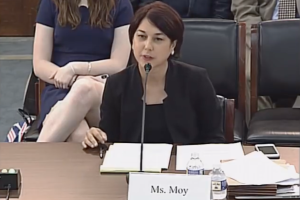
Testimony on Customer Proprietary Network Information Before U.S. House Committee by our Deputy Director
On July 11, 2018, the U.S. House of Representatives Energy & Commerce Committee, Subcommittee on Communications and Technology held a hearing, entitled "Protecting Customer Proprietary Network Information in the Internet Age." Deputy Director Laura Moy testified before the committee Watch the full video recording.
House of Representatives Testimony on Consumer Privacy
Executive Director Laura Moy testified about consumer privacy before the House Energy & Commerce Committee Subcommittee on Communications and Technology. In her testimony, Laura called for privacy legislation that establishes rulemaking authority and strong enforcement, and does not eliminate existing protections for consumers' data
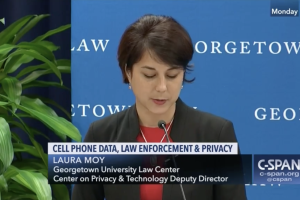
Location Privacy After Carpenter v. United States, Part I
The Center hosted a half-day event discussing the implications of the Supreme Court's decision in Carpenter v. United States, a landmark case about the privacy of cell phone location information.

Op-Ed: A License to Discriminate
Executive Director Alvaro Bedoya argued in an op-ed for The New York Times that "the impact of consumer tracking varies greatly by race, class, and power."