

Our Work
Founded in 2014, the Center on Privacy & Technology is a leader at the intersection of privacy, surveillance, and civil rights.
Latest Work

Panel: Exploring How Face Recognition May Appear Before Judges
As part of the Council of Chief Judges of the State Courts of Appeal Annual Conference, Senior Associate Clare Garvie participated on a panel aimed at exploring how face recognition may appear before judges as an element of a case, and issues relating to privacy, due process, equal protection, discrimination, data ownership, and control.

Oral and Written Testimony on the MA Information Privacy Act
Associate Cynthia Khoo submitted oral and written testimony on the Massachusetts Information Privacy Act, to the MA Joint Committee on Advanced Information Technology, the Internet and Cybersecurity. MIPA would restrict biometric and worker surveillance and algorithmic discrimination.
Joint Committee Hearing on Massachusetts Information Privacy Act
Associate Cynthia Khoo submitted oral and written testimony on the Massachusetts Information Privacy Act, to the MA Joint Committee on Advanced Information Technology, the Internet and Cybersecurity. MIPA would restrict biometric and worker surveillance and algorithmic discrimination.
News Beat Podcast: Facial Recognition & Wrongful Arrests
News Beat highlighted the wrongful arrests of Michigan residents Michael Oliver and Robert Williams. Center Senior Associate Clare Garvie spoke with hosts about the risks to free speech and privacy posed by the widespread adoption of the technology, misuse, and its racial impacts.
Inefficiencies of Facial Recognition Technology
On the BBC World Service, Senior Associate Clare Garvie discusses the inefficiencies when it comes to facial recognition technology, which is starkly different from much more reliable biometric data, such as fingerprinting or DNA. She explains the particular consequences that come with this flawed technology, such as misidentification of suspects, which oftentimes victimizes marginalized populations.
60 Minutes Highlights Police Face Recognition Technology
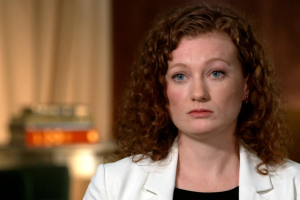
CBS 60 Minutes profiled the use of face recognition by police in the wake of three publicized misidentifications resulting from the technology. Senior Associate Clare Garvie was interviewed.
PBS: How Racial Biases can Corrupt Facial Recognition Technology
PBS NOVA produced a segment on police face recognition risks, highlighting the misidentification of Detroit resident Michael Oliver. Senior Associate Clare Garvie was interviewed.
The State of Face Recognition in America Webinar
A student chapter of AI4ALL, a US-based nonprofit dedicated to increasing diversity and inclusion in AI research and policy, invited Senior Associate Clare Garvie to give a webinar with Emiliano Falcon-Morano of ACLU-MA on face recognition use by police.
Unfamiliar Face Identification Group Keynote
Senior Associate Clare Garvie gave a keynote presentation about face recognition in U.S. policing for the UFIG annual meeting, an initiative at the University of New South Wales aimed at informing the debate around face recognition development and deployment.
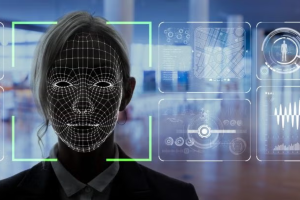
GU Law Facial Recognition Experts Launch “Week One” Simulation
Director of Research and Advocacy Emily Tucker and Senior Associate Clare Garvie co-taught a Week One course for 1Ls on big data, face recognition, and legislative lawyering, culminating in a mock hearing where students argued the merits of a bill limiting federal access to Maryland driver data.