Commencement 2026: Georgetown Law Graduates Embrace Law as the ‘Means to Fight’ for Justice
May 18, 2026
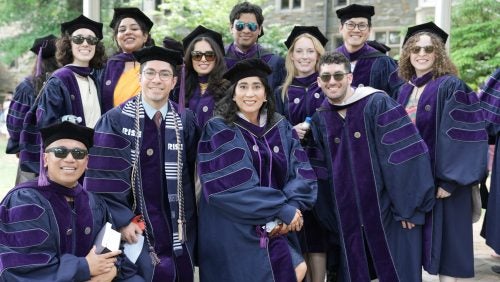
Class of 2026 graduates gathered for commencement on the Hilltop campus. Photo credit: RCS Photography.
More than 1,000 spring graduates — including some 688 J.D. candidates, 373 LL.M. and 5 S.J.D. candidates — gathered with family and friends to celebrate commencement on Georgetown University’s historic Hilltop campus on Sunday, May 17.
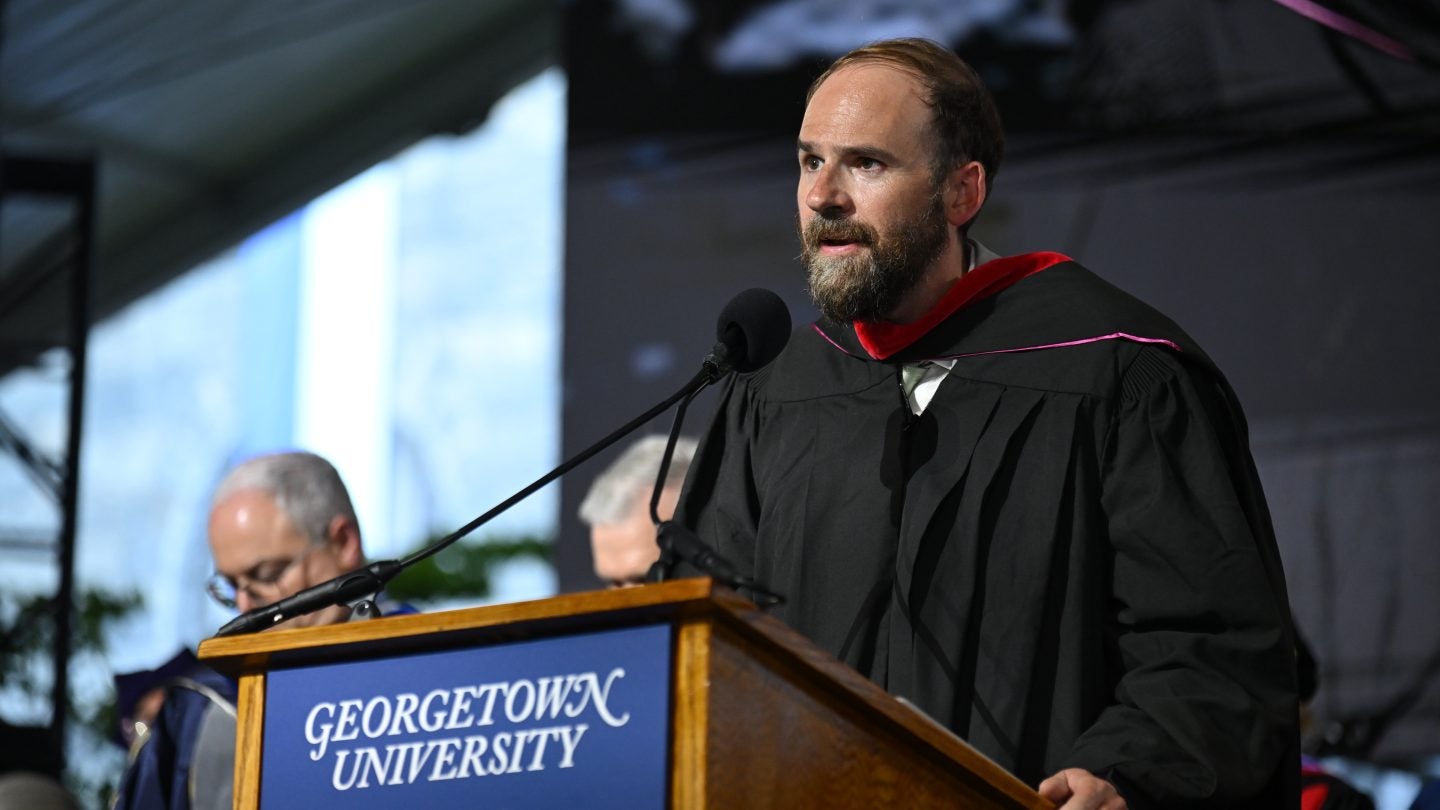
As graduates prepare to enter a world increasingly marked by polarization and challenges to the rule of law, speakers urged the Class of 2026 to confront injustice in their work as legal advocates. “When we see injustice, we can call it out and fight, or we can turn away and accede to it,” said Professor David Cole, the Honorable George J. Mitchell Professor in Law and Public Policy, who delivered Sunday’s commencement address. “The law gives you the means to fight.”
A nationally recognized expert on the First Amendment and former national legal director of the American Civil Liberties Union (ACLU), Cole underscored the role of legal advocates in creating dialogue across differences. “Being open to the other side’s perspective is especially difficult in deeply polarized times like today,” he said. “But for the same reason, it is absolutely essential.”
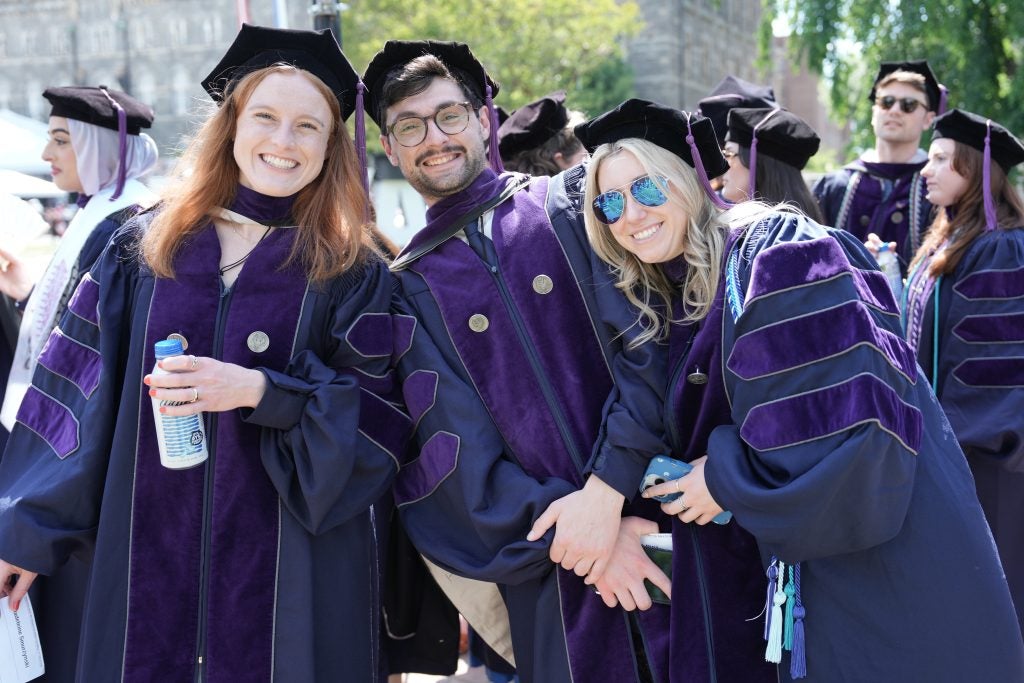
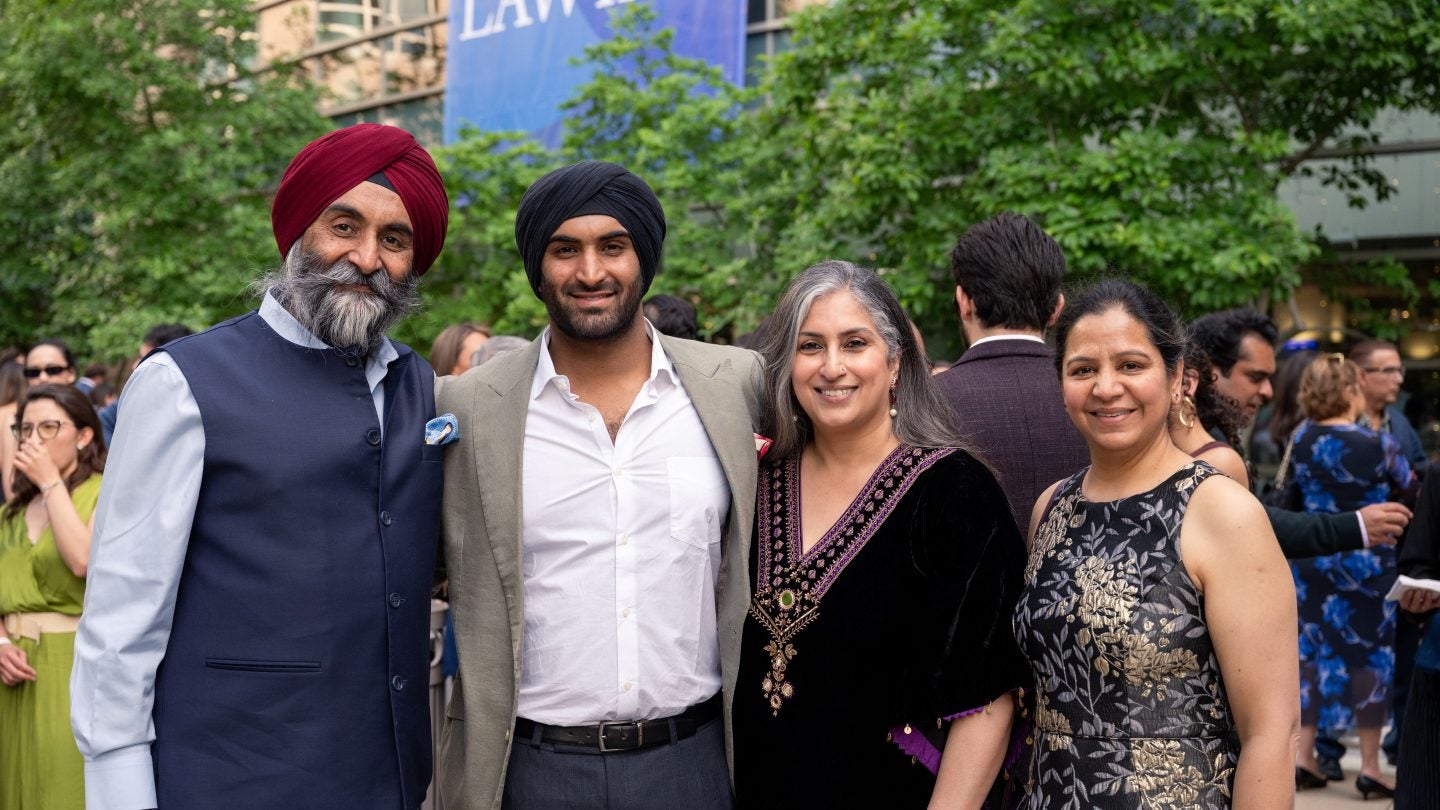
Classmates celebrated with friends and loved ones at Sunday’s ceremony. Photo credit: RCS Photography.
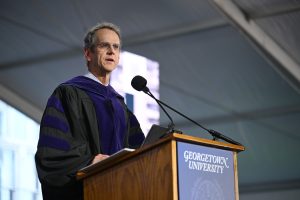
Professor David Cole congratulated graduates on their accomplishments, including performing more than 20,000 hours of pro bono service during their time at Georgetown Law. Photo credit: RCS Photography.
Cole also emphasized the role of law and its practitioners in checking abuses of power. “At its best, [the law] gives voice to the vulnerable, provides guidance to those in need, stands on principle and demands fairness for all,” he said.
In concluding his remarks, Cole urged graduates to advance the fight for justice in their legal careers — and to act as champions of hope for themselves and others. “No matter where you practice, as lawyers you will face choices,” he said. “You can practice in ways that advance fairness, or in ways that obstruct justice … In ways that scapegoat the vulnerable, or that defend them. I hope that as alumni of Georgetown Law School, you’ll know what side of the ‘v’ to stand on.”
A call to be ‘lawyers for others’
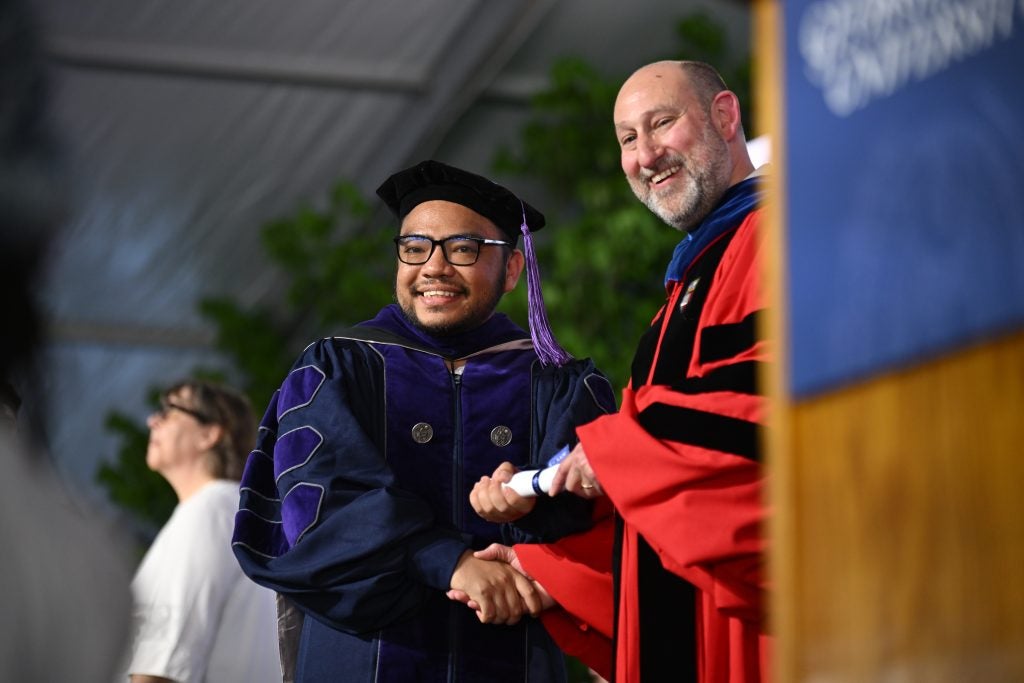
At Sunday’s ceremony, law graduates were called individually to the stage to receive ceremonial diplomas from Law Center and University leaders, including Interim Dean Joshua C. Teitelbaum (right). Photo credit: RCS Photography.
Following Cole’s remarks, graduates were called by name to the stage to receive ceremonial diplomas.
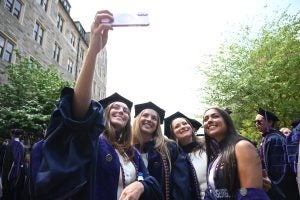
Friends celebrated — and snapped selfies — on the Hilltop campus. Photo credit: RCS Photography.
After all graduates were recognized, Interim Dean Joshua C. Teitelbaum spoke to the crowd, urging the graduates to act as “lawyers for others” in the next chapter of their legal careers. “Take a capacious view and see people’s full humanity,” he said, referencing the Jesuit principle of cura personalis, or “care of the whole person.” “If you do, I think you will find that we have far more in common than that which divides us.”
Interim Georgetown University President Robert M. Groves then presented concluding remarks that underscored the day’s themes of dialogue and understanding — as well as Georgetown’s commitment to intellectual and academic freedom.
“As a Catholic and Jesuit university, Georgetown will vigorously defend our right to determine what we teach, how we teach, whom we teach and who teaches,” he said. “Your paths may be different, but as a graduate of Georgetown, the call is the same: to use your skills in service to others.”
Watch the full Georgetown Law Commencement Ceremony here.
Learning the law, enacting change
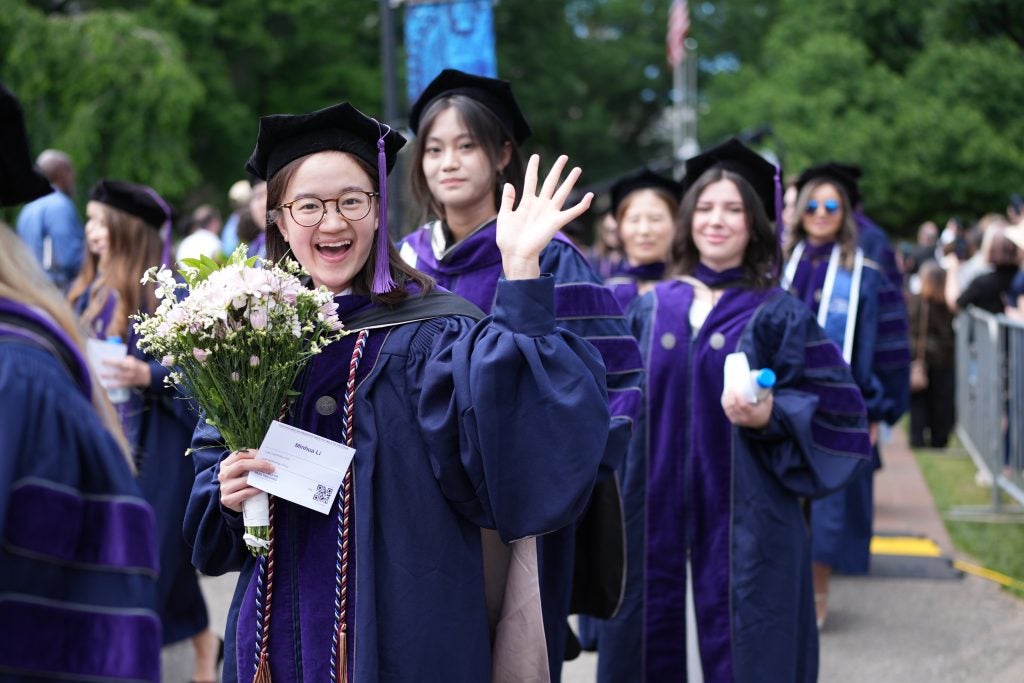
Following sendoffs and receptions at the Law Center, the Class of 2026 gathered on the Hilltop campus. Photo credit: RCS Photography.
For graduates, commencement also offered the chance to reflect on their service on behalf of others during their time at Georgetown Law — whether through hands-on lawyering in clinics or through experiential learning offerings, volunteering outside the Law Center or mentoring fellow students — and in the work they will pursue after graduation.
Graduates joined their section and program classmates for Sunday’s ceremony. Photo credit: RCS Photography.
For Blume Public Interest Scholar Jakob Hollenbeck, L’26, the desire to safeguard the rights of others motivated his legal studies. “I went to law school to do prison condition litigation,” said Hollenbeck, who after graduation will join the MacArthur Justice Center’s Supreme Court and Appellate Program as a fellow working on prison and police appeals in the federal courts.
Hollenbeck pointed to the support of his first-year classmates in Section 3, which offers Georgetown Law’s alternative 1L “Curriculum B,” as an invaluable source of support during his legal education. “We learned the law as a tool in our toolbox that we can use to enact social change,” he reflected. “These rules are made by people, and they can be unmade by people.”
The value of community was also top of mind for Chloe Miracle-Rutledge, L’26. “RISE was everything to me,” Miracle-Rutledge said of the RISE program, which is designed to serve students who may have had less exposure to the legal profession before law school. “The lesson going forward is to surround yourself with authentic good people that want to do good in the world.”
The chance to take part in the Appellate Litigation Clinic during her 3L year was another highlight for Miracle-Rutledge, who after graduation will clerk for the Honorable Joshua Deahl of the District of Columbia Court of Appeals before joining Covington & Burling LLP as an associate. “It was so incredible to actually start using my legal skills,” she said of her clinic experience, noting the robust culture of collaboration and support among clinic students, fellows and faculty. “Lawyering clicked for me.”
Ahead of commencement, we asked eight members of the J.D. Class of 2026 what Georgetown Law taught them about themselves — click here to watch.
‘Dialogue is a discipline’
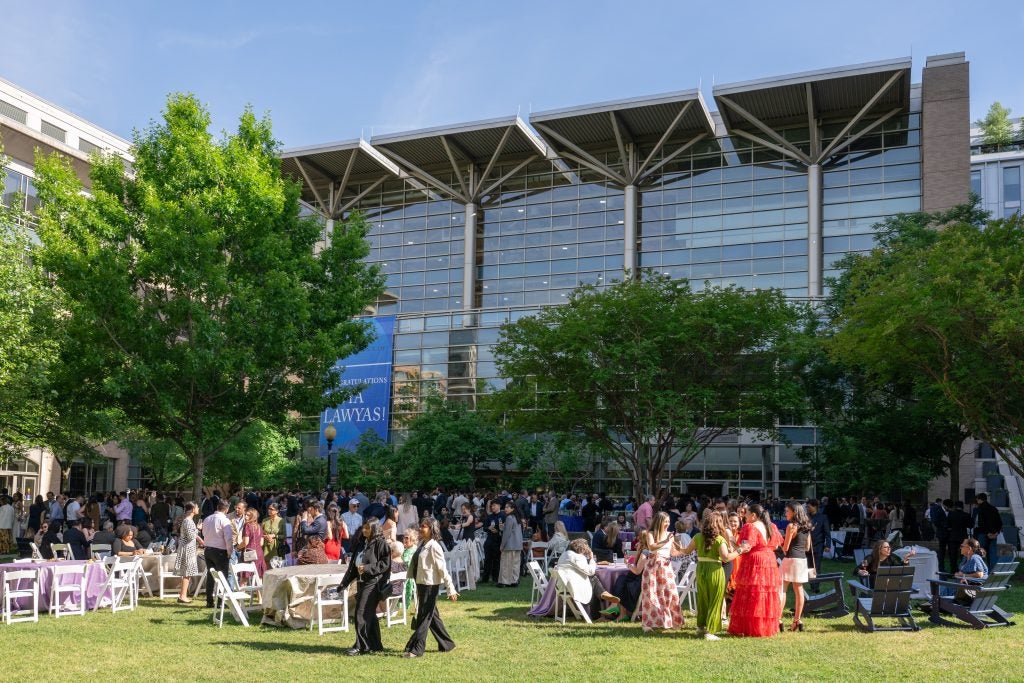
Students celebrated with friends and family at cocktail receptions held at the Law Center campus on Friday and Saturday evening.
During the week leading up to Sunday’s ceremony, students convened at the Law Center for a series of community celebrations, including “friends and family” receptions at which loved ones and faculty joined J.D. and LL.M. graduates at festive Friday and Saturday evening cocktail receptions spanning the Georgetown Law campus.
The receptions were preceded by ten section- and program-specific sendoffs held Tuesday through Thursday, where graduates gathered with their first-year sectionmates and program classmates to celebrate their shared accomplishments and cheer on student and faculty speakers representing each cohort.
During their remarks, student sendoff speakers reminisced about shared triumphs, challenges and memories — from mastering cold-calling and 1L exams to late-night pizza runs — and the value of building lasting connections among a class that represented all 50 states and more than 70 countries around the world.
Watch our Class of 2026 student profiles on YouTube.
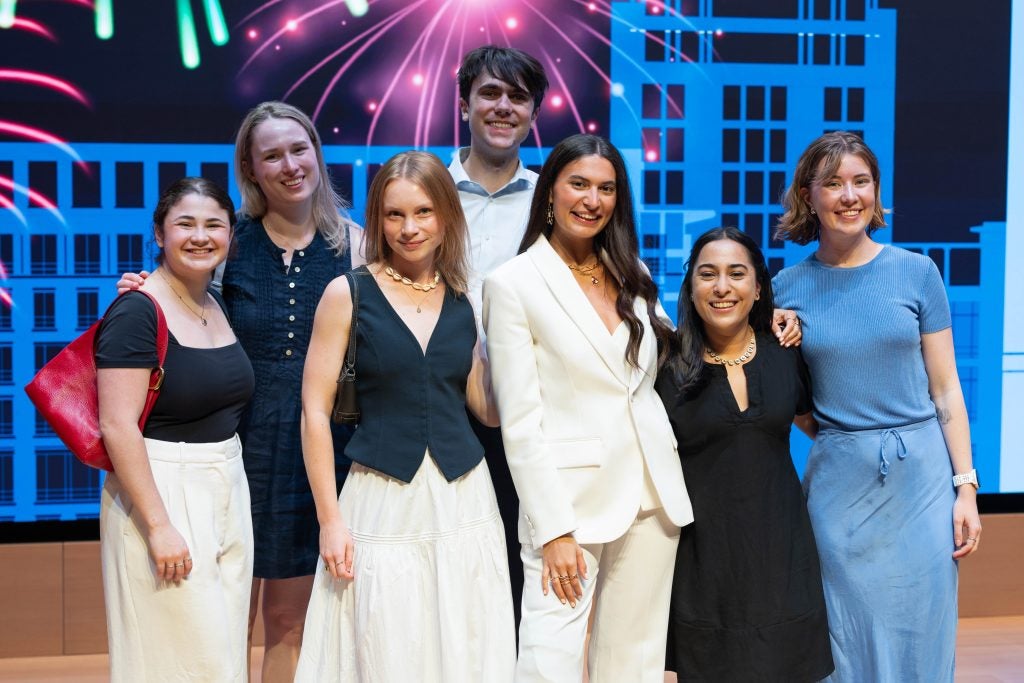
In the days leading up to commencement, classmates gathered for section- and program-specific sendoffs held in Hart Auditorium. Jakob Hollenbeck (back row center), L’26, reflected that taking part in Section 3 during his 1L year was the “highlight” of his law school experience.
For student speaker and Colombian-qualified lawyer Blanca Beltrán, L’26, an international arbitration scholar who represented a cohort of LL.M. students (many of whom are foreign-trained attorneys), commencement offered the chance to highlight the contributions of her classmates in practice areas ranging from energy and infrastructure to international law and diplomacy.
“Georgetown taught us that dialogue is a discipline that makes us stronger. And in a world becoming more polarized, that discipline matters now more than ever,” said Beltrán, who reflected on how the history of armed conflict in her home country influenced her view of legal advocacy. “The people in this room have the talent, the education, the passion and, most importantly, the humanity to build bridges instead of walls.”
Representing Section 4 was Student Bar Association (SBA) President Natasha Panduwawala, L’26, who, like Teitelbaum would at the commencement ceremony, emphasized the value of the Jesuit idea of cura personalis in legal practice.
“We didn’t see law as just a tool, we used it to serve, to advocate, to build something much larger than ourselves,” she said. “Wherever we go next — across firms, nonprofits, public service and courtrooms around the world — I hope we carry not just what we learned, but why we learned it.”
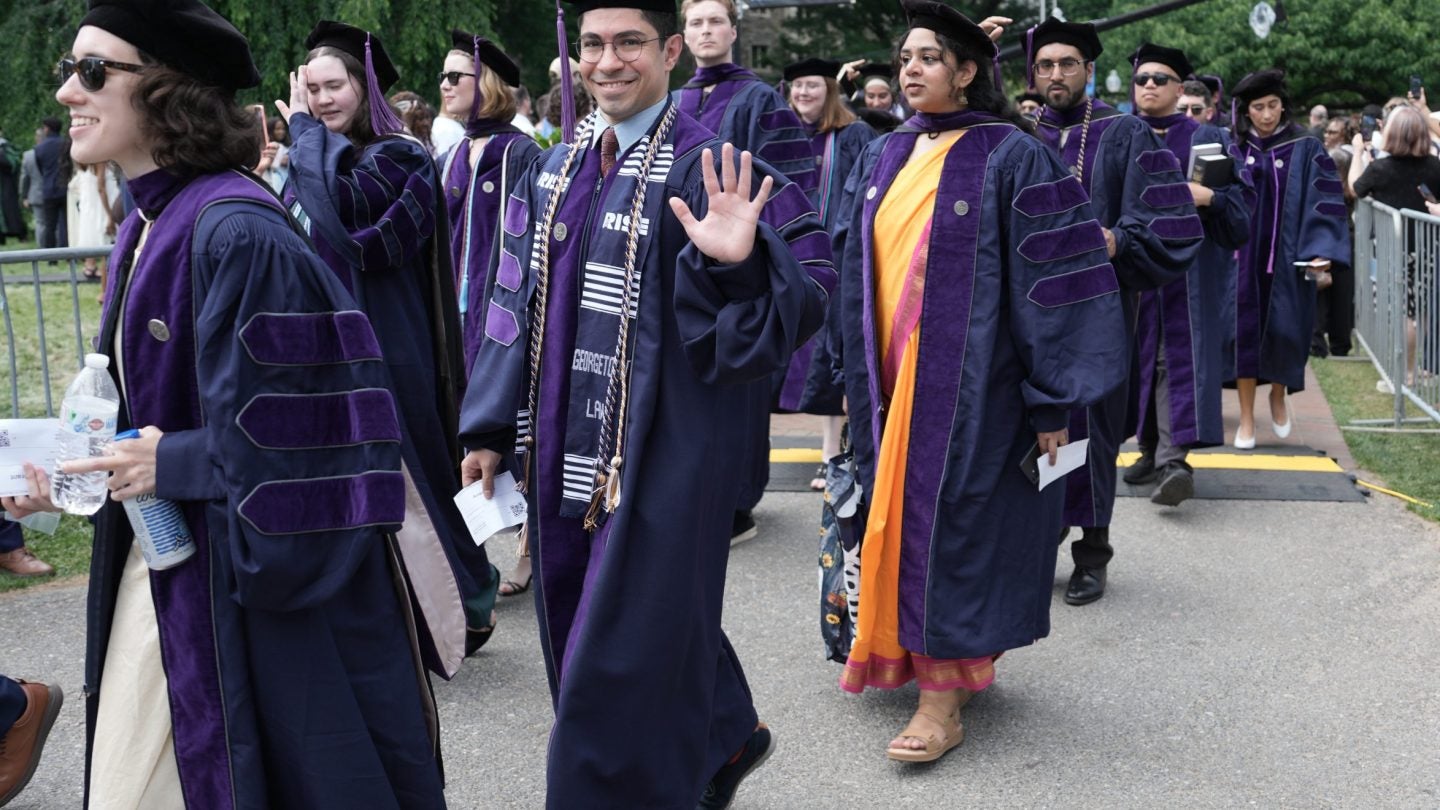
Graduates processed onto Georgetown University’s Healy Lawn to kick off Sunday’s ceremony. Photo credit: RCS Photography.
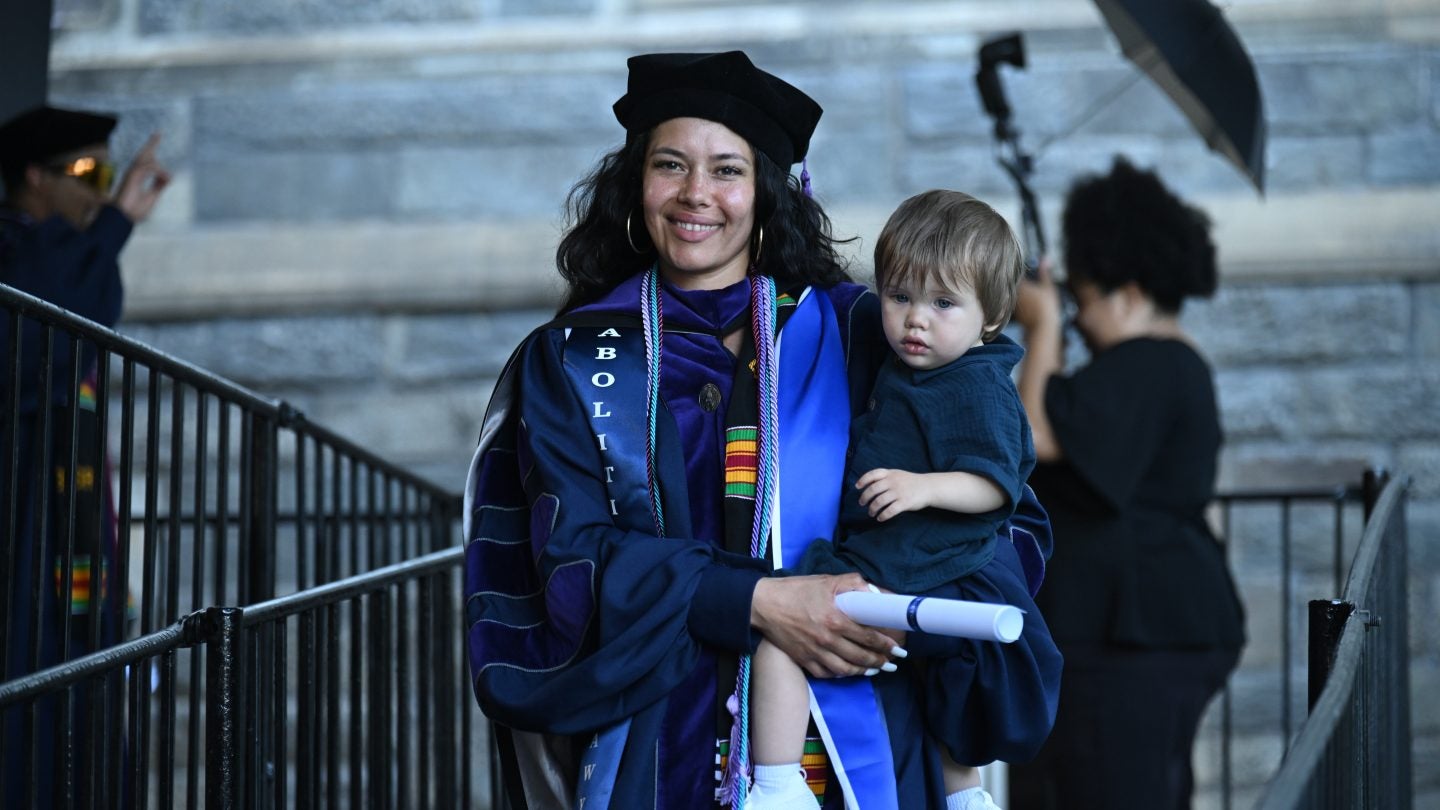
The celebration included loved ones of all ages. Photo credit: RCS Photography.
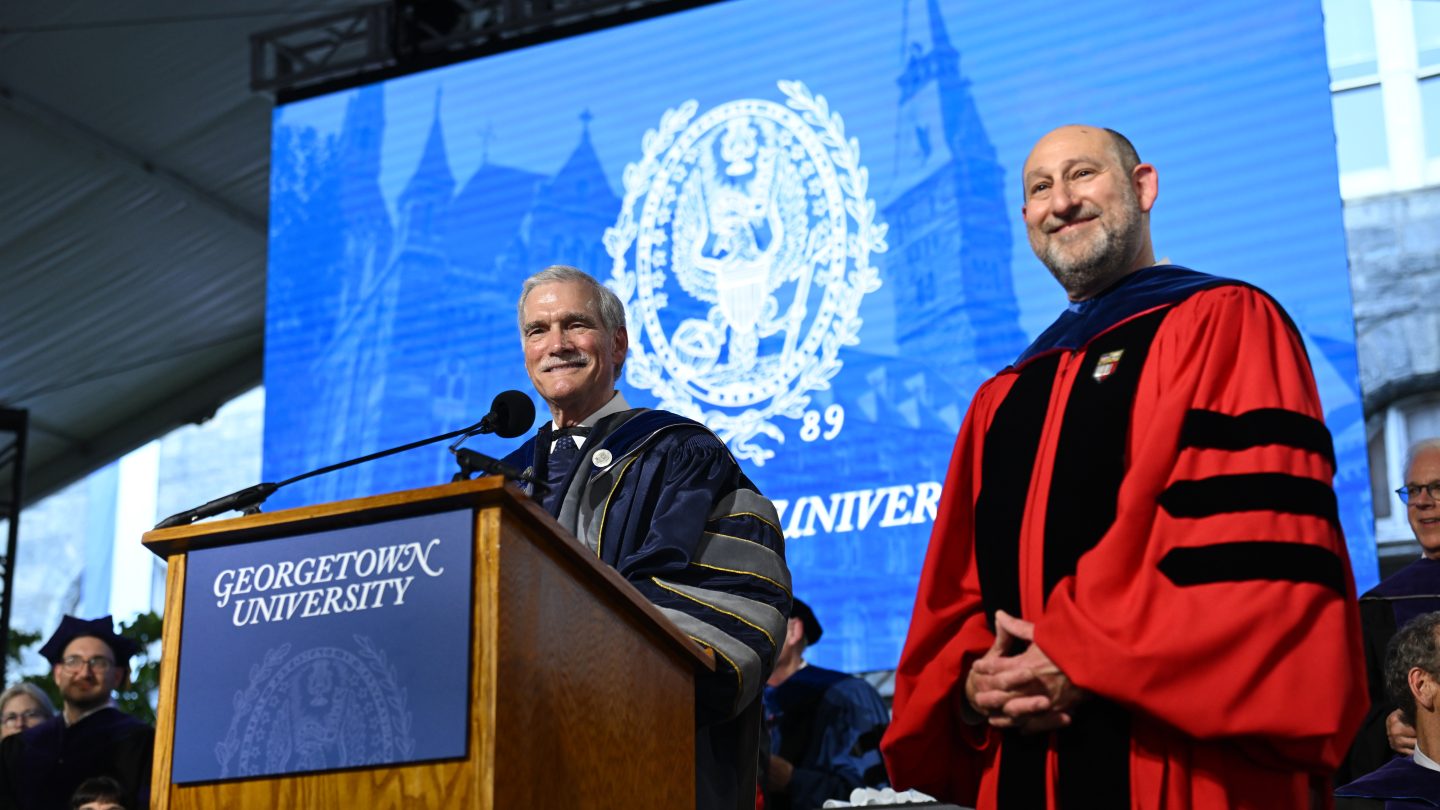
Interim Georgetown University President Robert M. Groves (left) and Interim Dean Joshua C. Teitelbaum (right) delivered concluding remarks at Sunday’s ceremony. Photo credit: RCS Photography.
Graduates and loved ones enjoyed cocktail receptions on the Law Center campus.
Capitol Campus Director for Mission and Ministry Jamie Kralovec offered a benediction to close Sunday’s ceremony. “May they be inspired and steadfast in their lifelong pursuit of justice,” he said. Photo credit: RCS Photography.
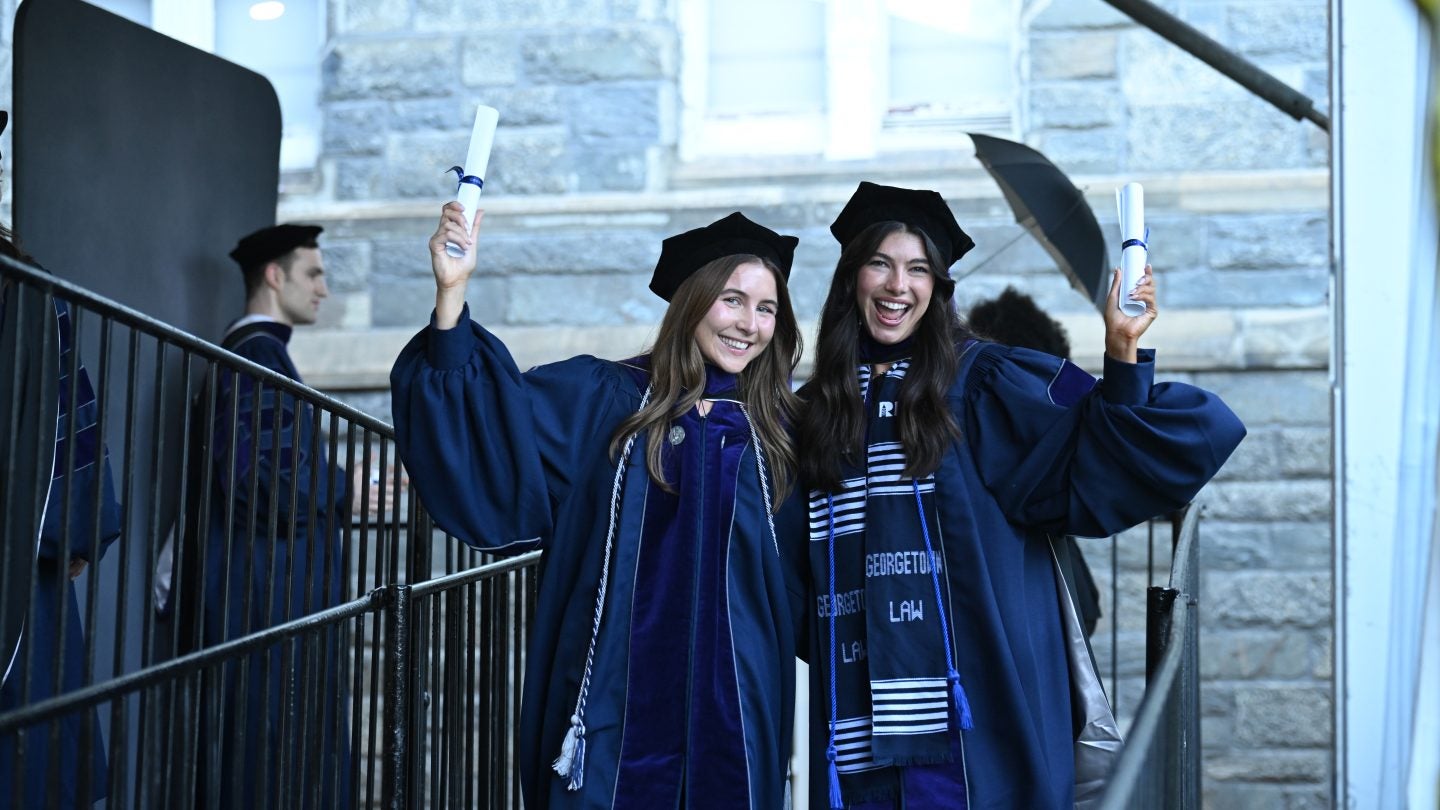
Graduates celebrated after receiving their ceremonial diplomas. Photo credit: RCS Photography.
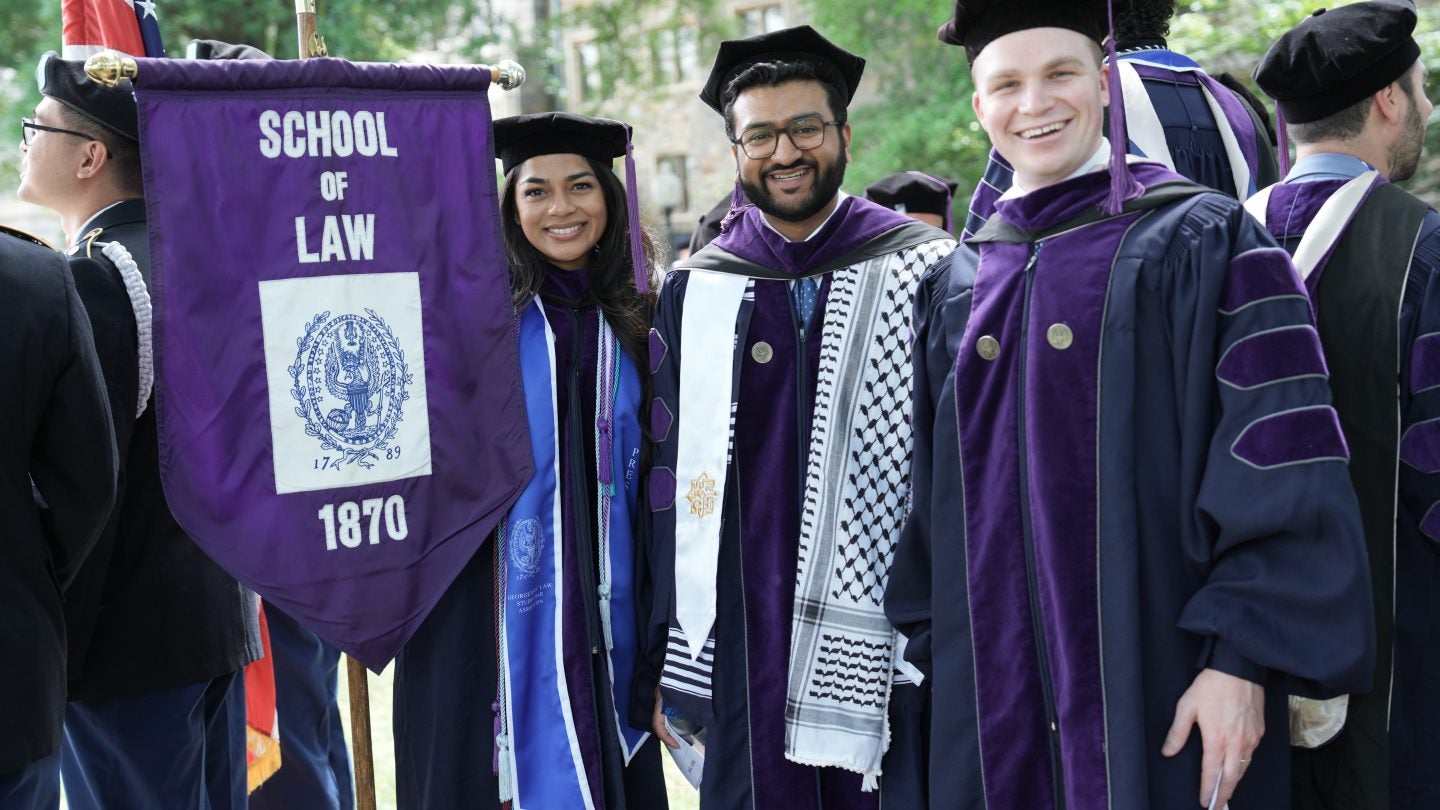
Members of the Interfaith Advisory Council (L-R: Carly Kabot, F’23, L’26; Taha Syed, L’26; Ian Stapleton, L’26) delivered the invocation at Sunday’s ceremony. Photo credit: RCS Photography.
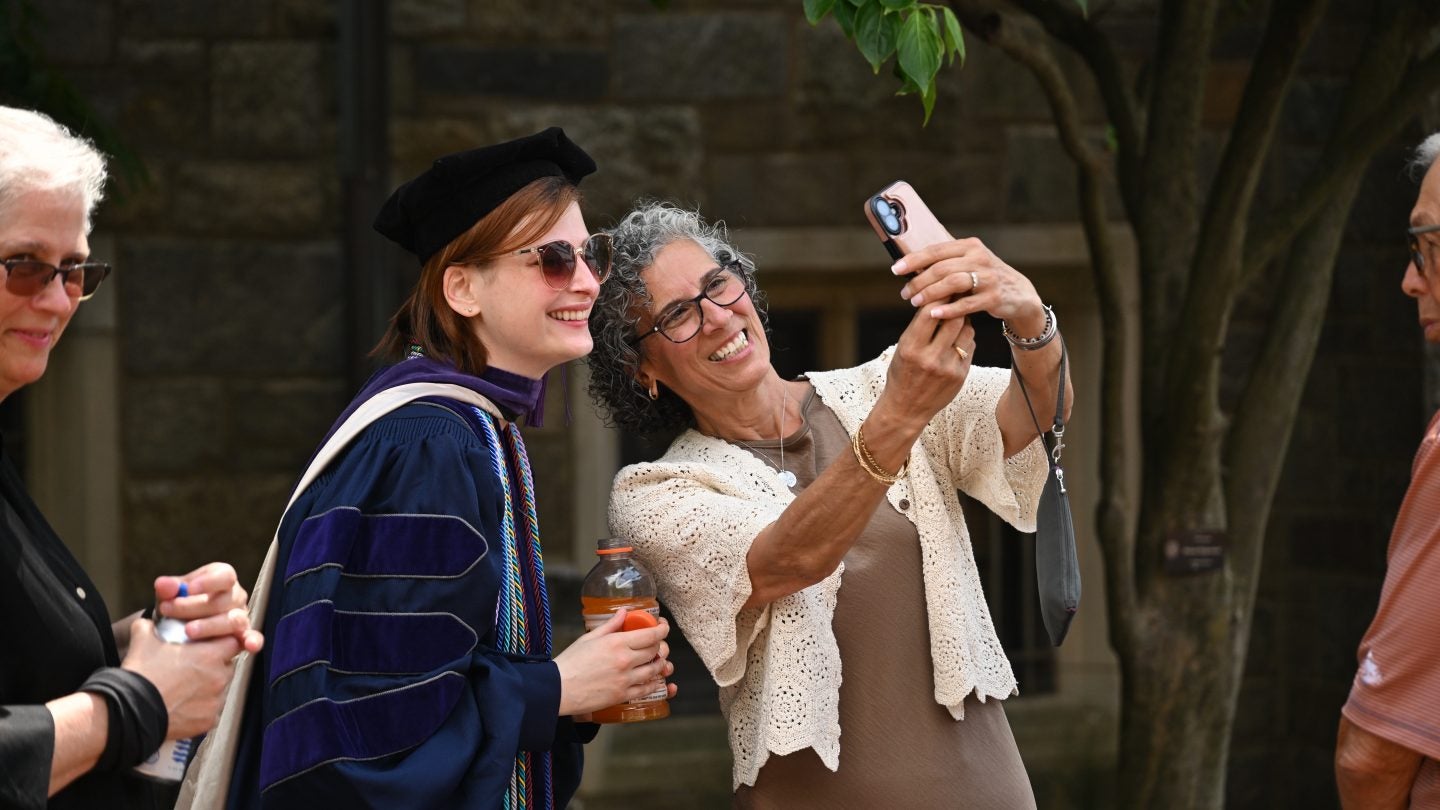
Family and friends were present to cheer graduates on. Photo credit: RCS Photography.
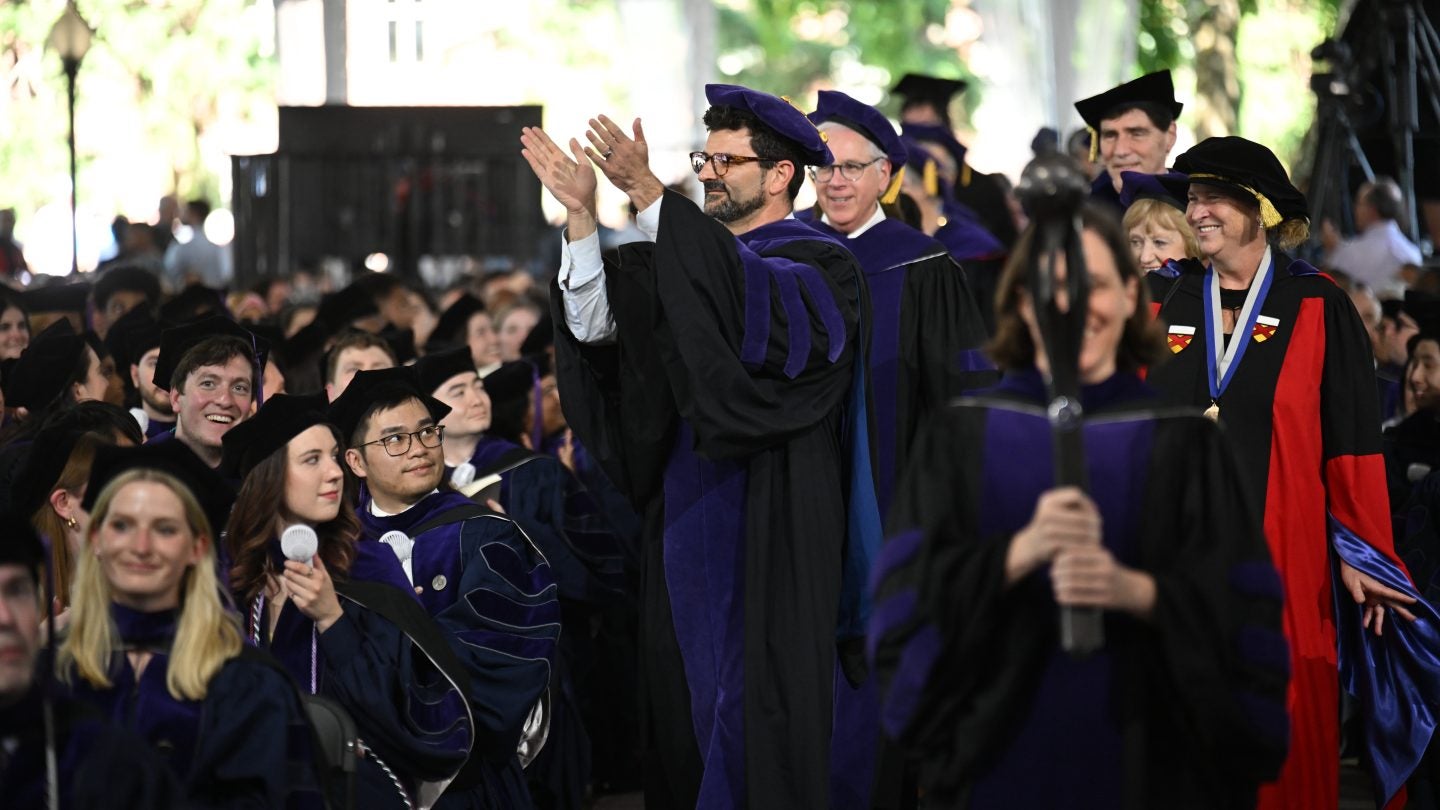
Associate Vice President and Dean of Students Mitch Bailin led faculty in the procession on Healy Lawn. Photo credit: RCS Photography.
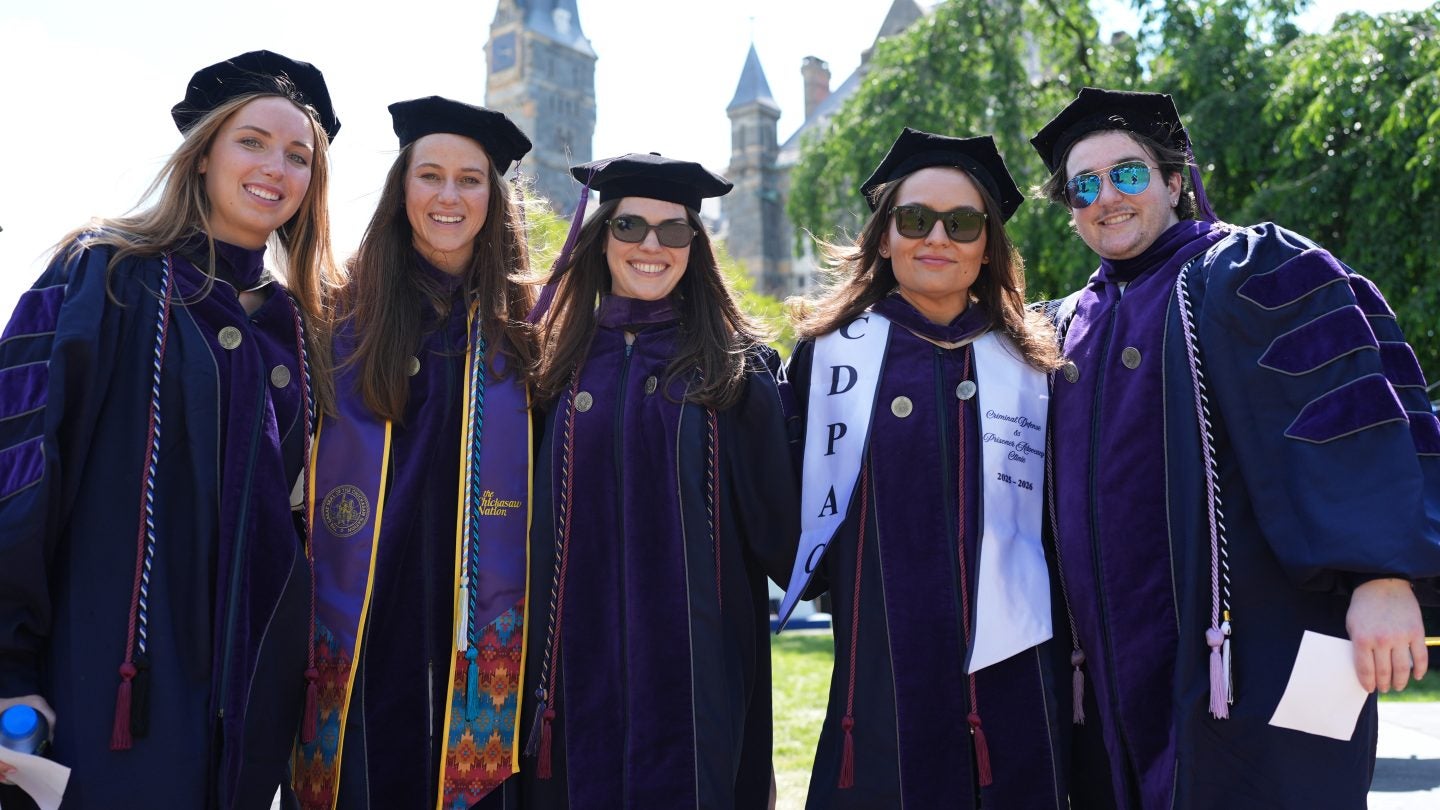
Sunday’s ceremony took place on the historic Hilltop campus. Photo credit: RCS Photography.
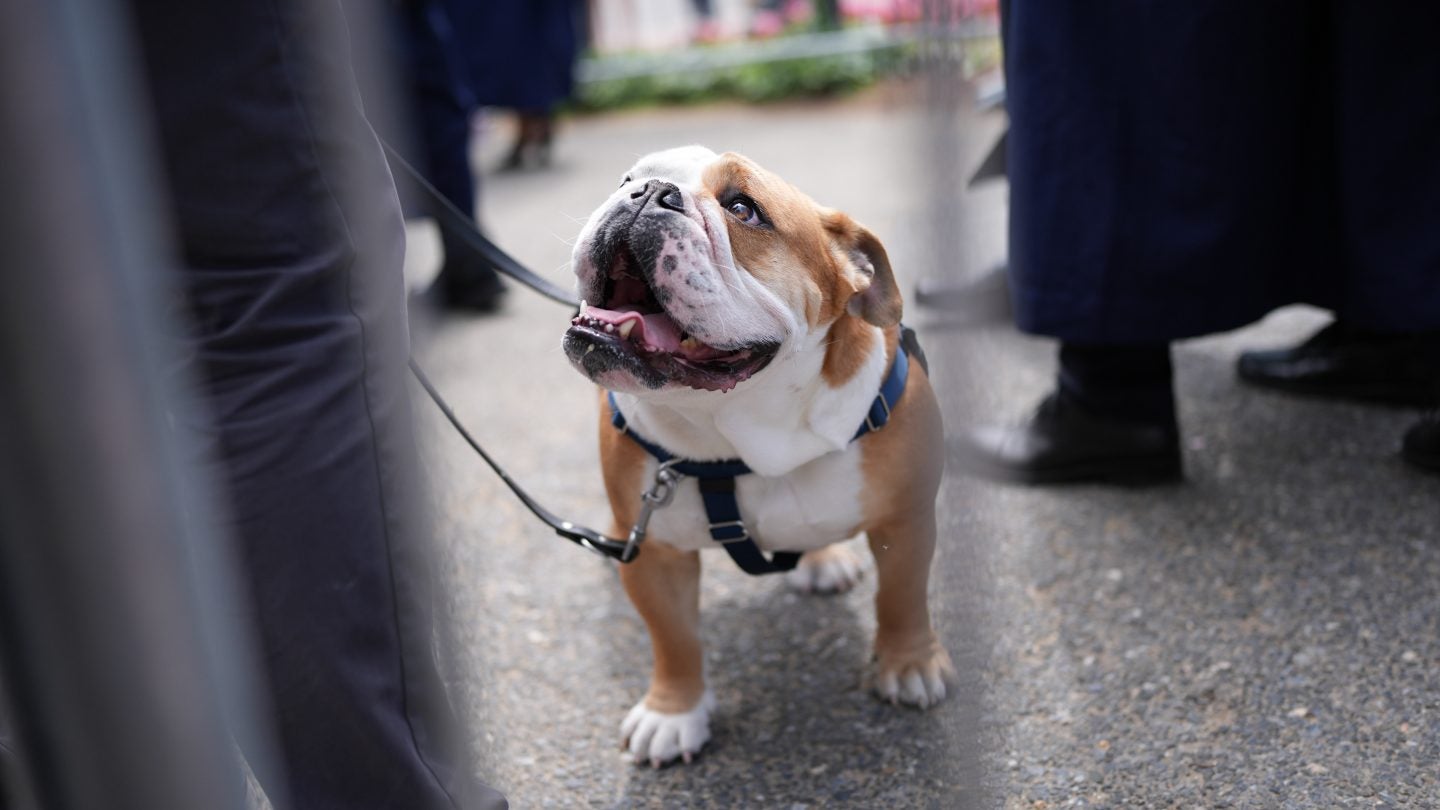
Beloved Georgetown mascot Jack the Bulldog joined in the festivities. Photo credit: RCS Photography.