

Jack Scarola (L’73): Why Trial Skills Matter in Human Rights Advocacy
Nearly five decades after joining what is now Searcy Denney Scarola Barnhart & Shipley, Jack Scarola (L’73) remains deeply engaged in some of the most challenging and consequential litigation of his career.
A Practice Built on Teamwork, Persistence and Accountability for Victims
A partner at the Florida-based plaintiffs’ firm since 1978, Jack has built a reputation for taking on cases that require years, and sometimes decades, of commitment in pursuit of justice for vulnerable communities and victims of crimes, internationally and domestically.
Among his most significant ongoing matters is the litigation against Chiquita Brands International arising from the company’s admitted payments to paramilitary groups in Colombia. The case, which has been ongoing for more than fifteen years, involves thousands of Colombian families seeking accountability for violence committed by paramilitary organizations that operated in the country’s banana-growing regions. 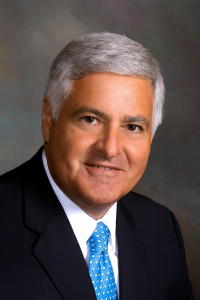 Jack has served as lead counsel for a nationwide team of attorneys representing victims and their families, including Georgetown Law’s current Drinan Chair in Human Rights, Agnieszka Fryszman.
The litigation has required extraordinary collaboration among lawyers from across the country. Jack credits the dedication of the lawyers involved and their shared commitment to the clients for sustaining the case over such a long period.
In 2024, a federal jury awarded nearly $38 million to the families of victims in wrongful death claims. Thousands of additional claims remain pending.
“Colombian nationals who were subjected to Chiquita-sponsored terrorism suffered horribly at the hands of the terrorist organizations that were controlling the geographic areas in the banana regions of Colombia. So it has been a great challenge, and a very satisfying one,” says Jack Scarola.
Jack has also spent more than a decade representing survivors of Jeffrey Epstein’s abuse. What began with a referral from a local attorney grew into years of litigation and advocacy on behalf of numerous survivors. His work extended beyond individual compensation claims and included efforts to protect and enforce victims’ rights throughout the legal process.
Looking back on both the Chiquita and Epstein cases, Jack sees a common thread running throughout his trial work. Each case required lawyers willing to commit to a cause for the long term, often without any guarantee of financial success. Yet for him, the value of the work has never been measured solely in verdicts or settlements.
“Regardless of whether there is a financial benefit,” he says, “undertaking the effort in and of itself contributes significantly to the quality of life in our society.”
From Georgetown Law to the Courtroom
Jack’s path to human rights and social justice litigation was winding.
“The reason I chose to get a law degree,” he says, “is because I didn’t know what I wanted to be when I grew up.”
After completing his undergraduate studies at Georgetown, he enrolled at Georgetown Law. But his legal education quickly took an unexpected turn. After receiving a low draft lottery number, which meant he was highly likely to be drafted and sent to Vietnam, Jack left Georgetown Law midway through his first year to enlist in the D.C. National Guard.
During his National Guard training, Jack and his wife Nita learned they were expecting their first child. When he returned to Georgetown, he was required to begin his first year again because many first-year courses were year-long classes. He returned not only as a first-year law student, but also as a husband and father.
To support his growing family, Jack worked a series of jobs while attending law school. He tended bar, waited tables, substitute taught, and worked on a federally-funded project surveying drug rehabilitation programs. He also sought out practical legal experience through Georgetown’s early clinical programs, representing indigent clients and providing legal services to students through the Georgetown Law Clinic.
The experience that changed everything came during the summer between his second and third years of law school. Because Florida was one of the first states to allow third year law students to appear in court, Jack was given the opportunity to appear in court under the supervision of a local prosecutor. Because the office was short-staffed, he was assigned felony cases and quickly found himself trying cases in court.
“I got bitten by the litigation bug,” he recalls. “I absolutely loved it.”
After graduation, Jack spent five years as a criminal prosecutor in the Florida state attorney’s office, eventually serving as chief felony prosecutor. The experience gave him extensive courtroom experience.
“There’s no better way to learn to be a trial lawyer than being in the courtroom,” he says.
He later joined Searcy Denney, attracted by the firm’s commitment to social justice. There, Jack knew he would be able to continue working on cases that would have broader social impact. Not long afterward, he became lead counsel in a landmark race and sex discrimination case against the Calkins Indiantown Citrus Company. The sex discrimination case settled before trial, but the race discrimination case went to trial and ultimately resulted in compensation for residents and the creation of an educational fund for local children.
“It changed that town dramatically,” Jack says.
The case cemented his commitment to using litigation not only to help individual clients, but also to create broader social change, even when it takes decades to secure.
Advice for Future Human Rights Lawyers
When asked what skills are most important for aspiring litigators and human rights advocates, Jack’s was emphatic: learn how to listen.
Young lawyers often enter court with detailed plans and carefully scripted examinations. The danger, he explains, is becoming so focused on preparation that you stop paying attention to what is happening in the courtroom.
“You cannot be an effective litigator without the ability to listen,” he says. “As much as you may have prepared in advance, you need to have the ability to pivot.”
Listening means paying attention not only to what the witness or the judge says, but both how they say it—and what they leave unsaid.
Jack also emphasizes the importance of choosing the right teammates. The cases that have defined his career have often taken more than a decade to resolve. Such work requires colleagues, institutions, and law firms willing to support cases that may take years—or even decades—to resolve.
“You need the support of a team that will recognize those long-term benefits,” he says
At a time when many traditional sources of support for human rights work face growing challenges, Jack believes the responsibility of private lawyers, public interest organizations, and community advocates has only increased. The need for justice, he notes, has not diminished.